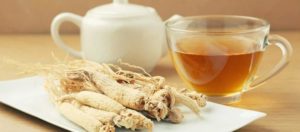
Share thisTweet2SharesGinseng Medicinal Uses and Benefits As one of the plants for s*xual organs, ginseng medicinal uses are applicable to healing a wide range of afflictions. Ginseng is not a dope but it works wonders. With regards to its scientific name “Panax”, we are sure ginseng got this name after having its healing properties recognized to be quite enormous. The name Panax comes from these Greek words; pan and anox, meaning “all” and “healing”. Therefore, it’s scientific names Panax means “all-healing”. Ginseng has gained a wide popularity in Western parts of the globe due to its aphrodisiac effects. Ginseng medicinal uses are quite effective especially in the area where this medicinal plant has been used to stimulate s*xual glands and also increase s*xual performance in cases of female sterility and s*xual impotence. This medicinal plant belongs to the Araliaceae family. It grows from 20 to 50 cm having its flowers growing in groups of five. The color of the flowers are purple and they produce fruits. Its root is very fleshy and comes in white or greyish in color. The part to use for medicinal purposes is the root but when it must have attained five years of age. SEE ALSO: Why You Should Not Eat Pork Properties of Ginseng According to Dr. George D. Pamplona-Roger, in his book “Healthy Plants”, all ginseng root components that are active are chemically complex to the level of not being able to synthesize them. These components are called ginsenosides which are chemically seen as steroid glycosides from the group of triterpenic saponins. All ginseng medicinal uses and therapeutic properties are dependent upon these chemical substances but they also seem to be enhanced by other components such trace elements and minerals which have sulphur, germanium, magnesium, manganese, calcium and zinc as top components. Other substances include: vitamins B1, B2, B6, biotin and pantothenic acid; phytosterol, enzymes and others. Ginseng Medicinal Uses and Effects Ginseng medicinal uses and effects on the body system are quite massive. It has the following effects on the body: As an invigorator Reproductive system Improvement Cardiovascular system Endocrine system Nervous system As an invigorator The active components of ginseng root (ginsenosides) allegedly enhance physical performance and endurance which are targeted at improving the metabolic processes. Another ginseng medicinal uses in this aspect is that it accelerates the enzymatic process of glycogenesis which is literally the glycogen production on the liver from sugar. It performs another action of glycogenolysis which is the production of sugar from glycogen stored. Other ginseng medicinal uses and effects in this perspective are as follows: Decrease of lactic acid concentration in muscles which is responsible for stiffness Increases ATP production (adenosine-triphosphate), a substance that gives energetic capabilities to cells Promotes the utilization of oxygen by cells Ginseng increases protein synthesis Stimulates blood production (hematopoiesis) in medulla of the bone Additionally, ginseng medicinal uses and effects only invigorate but does not trigger addiction. YOU MAY LIKE: Benefits of Eating Pomegranate Reproductive System Improvement Another one among ginseng medicinal uses is that it facilitates spermatogenesis (i.e. ginseng fosters the increase in spermatozoids production). As stated earlier, it stimulates s*xual organs of both the male and female, and also promotes production of hormones. Under this heading, ginseng medicinal uses and effects are seen in the following: Ginseng promotes s*xual capability Enhances the quality and frequency of male er*action Ginseng facilitates excitation in female g*enital organs. However, we cannot say that it is a true aphrodisiac because its action does not consist in causing s*xual desire. Consequently, it improves g*netalia function and capabilities. Cardiovascular System Here, among ginseng medicinal uses, it has a property that is quite vasorregulating, thereby balancing blood pressure. Endocrine System One of its active properties is anti-stress and this is due to its adaptogenic properties. This is due to the fact that ginseng improves increase in adaptation capabilities of the body to psychological or physical efforts. Studies find that both suprarenal and hypophysis glands can be stimulated using ginseng. Nervous System Some of the properties it exerts on the nervous system includes: anti-depressive and anxiolytic properties. This effect eliminates anxiety. One of the ginseng medicinal uses here is that it fosters mental performance. It also helps to increase concentration and memory capabilities. Ginseng Medicinal Benefits and Indications Indications for using this medicinal plant are the following: Senility and premature aging Anemia: Ginseng is quite effective and useful in covering blood loss after bleeding or donation. Low or high blood pressure and also used in lowering blood sugar, according to drugs.com Sports: It’s not a forbidden substance in sports because it is not a doping substance Physical exhaustion: In cases of weakness (asthenia), lack of energy, easy fatigue or convalescence from surgery or disease. Depression, insomnia, anxiety: ginseng is quite useful for students especially during examinations. Disorders to s*uality: impotence, hormonal insufficiency, female frigidity and female or male sterility as mentioned above. Preparation and its Internal Use It is usually seen as pharmaceutical preparation which comes in capsules, extracts, liquids etc. The normal dose is between 0.5 to 1.5 grams of root powder daily. It can be taken at a time or several intakes. The action is somewhat slow but very accumulating. The effects of ginseng medicinal uses are felt or become noticeable after three weeks of taking the treatment. It is advisable to take ginseng continuously over a period of two to three months. Before taking a new treatment, it is better to stop for one or two months before embarking on the new treatment. READ MORE: Foods to avoid with High Blood Pressure Warning! Over dose of this medicinal plant may aggravate to nervousness. Again, do not link or associate ginseng with tea or coffee because it is capable of producing nervous excitation. Also do not associate it with medicines or medications containing iron because it will interfere with the active components in ginseng thereby diminishing its medicinal effects. READ MORE Benefits of Eating Apricot Foods to Avoid for Heart Attack Rheumatoid Arthritis Foods to Eat Foods to avoid during Migraine Benefits of Taking Honey Benefits of Eating Tiger Nuts Related posts:Comfrey BenefitsFoods To Make Bones StrongerWhat Gives You HeartburnSide Effects of Drinking Moringa TeaGinger and Garlic Benefits for MenFidel PerezA graduate of Computer Science and Information Management Technology. Diploma – Caregiving, Certificates – Dementia and Diabetes Awareness and Management. A researcher, blogger, songwriter, singer and acoustic guitarist. Born in an environment where natural talents such as healing are imparted at our natural birth. This natural talents of healing is the result of our genetic inheritance and the training from family environment. Related Posts:Lobelia Medicinal Uses Amazing Lobelia Medicinal Uses Did you know that one of…Medicinal Mushrooms Medicinal Mushrooms: Natural Boosters for Immunity and Brain Health Discover…Lavender Uses and Benefits Awesome health benefits of lavender plant Lavender is a medicinal…Uses of Sunflower Seeds Healthful Uses of Sunflower Seeds Some amazing healthful uses of…Uses of Castor Beans Healthful Uses of Castor Beans It is quite imperative that…Borage Medicinal Uses Borage Medicinal Uses to Health Major borage medicinal uses can…Aloe Vera Medicinal Uses Helpful Aloe Vera Medicinal Uses It obviously a good thing…Medicinal Uses of Marigold Amazing Medicinal Uses of Marigold Before getting down to medicinal…
