Ear infections are one of the most common health issues that affect babies and young children. As a parent, seeing your child in pain and discomfort can be distressing, especially when it comes to their ears. While medical intervention is sometimes necessary, especially in severe or persistent cases, many parents seek gentle, natural remedies to help soothe their baby’s symptoms at home.
This comprehensive guide delves into safe, effective home remedies for ear infections in babies, providing parents with the information they need to care for their children with confidence.
Table of Contents
Introduction to Ear Infections in Babies
Causes and Symptoms of Ear Infections
When to See a Doctor
Home Remedies: What You Need to Know
Warm Compresses
Elevating the Baby’s Head
Breast Milk Drops
Garlic Oil Drops
Olive Oil Drops
Probiotics
Adequate Rest and Hydration
Over-the-Counter Pain Relief: What’s Safe?
Preventing Ear Infections in Babies
Myths and Misconceptions about Home Remedies
Frequently Asked Questions
Conclusion
Introduction to Ear Infections in Babies
Ear infections, medically known as otitis media, are particularly common in infants and toddlers. Studies show that about five out of six children will have at least one ear infection by the time they turn three years old. The structure of a baby’s ear makes them more susceptible to infections, as their Eustachian tubes are shorter and more horizontal than those of adults, making it easier for bacteria and viruses to reach the middle ear and harder for fluid to drain.
Ear infections are not only painful for babies but can also lead to temporary hearing difficulties, sleep disturbances, and, in rare cases, more severe complications. This guide aims to provide a thorough overview of safe home remedies, while emphasizing the importance of medical evaluation when necessary.
Causes and Symptoms of Ear Infections
Causes
Ear infections in babies can be caused by:
Bacterial or viral infections: Often following a cold or upper respiratory infection.
Allergies: Triggering inflammation and fluid buildup.
Bottle-feeding while lying down: This can allow milk to enter the Eustachian tube.
Exposure to smoke: Secondhand smoke increases the risk.
Pacifier use: Frequent use may increase the likelihood in infants.
Symptoms
Common signs of an ear infection in babies include:
Tugging or pulling at the ear
Unusual fussiness or irritability
Trouble sleeping or frequent waking
Fever (often low-grade)
Fluid draining from the ear
Loss of appetite
Trouble hearing or responding to sounds
If your baby is displaying several of these symptoms, it’s possible they are experiencing an ear infection.
When to See a Doctor
While home remedies can help alleviate symptoms, there are circumstances where you should always consult a pediatrician:
Your baby is younger than six months and shows signs of an ear infection
Symptoms last more than 48 hours or worsen
High fever (over 102°F or 39°C)
Pus or blood draining from the ear
Your baby seems very unwell, lethargic, or inconsolable
Hearing loss is suspected
Prompt medical attention is crucial to prevent complications such as hearing loss or the spread of infection.
Home Remedies: What You Need to Know
Before using any home remedy, it’s important to:
Confirm the eardrum hasn’t ruptured. Never put anything into the ear if you suspect a ruptured eardrum (pus or blood discharge, sudden relief of pain, or hearing loss).
Use remedies as supportive care, not as replacements for professional medical advice.
Practice good hygiene, especially when handling your baby’s ears.
Let’s explore the most effective and gentle home remedies parents turn to for ear infections in babies.
Warm Compresses
How It Helps
A simple warm compress can be remarkably effective at easing ear pain by increasing blood flow and relaxing the area around the ear. The warmth can help reduce inflammation and discomfort.
How to Apply
Soak a clean washcloth in warm (not hot) water and wring it out.
Fold it and gently place it over your baby’s affected ear for up to 10–15 minutes.
Repeat as needed, ensuring the cloth is always just warm, not hot, to avoid burns.
Precautions
Never use heating pads or hot water bottles directly on your baby’s skin.
Always test the temperature on your wrist before applying it to your child.
Elevating the Baby’s Head
Elevating your baby’s head during sleep can help promote ear drainage and relieve pressure in the middle ear.
How to Do It Safely
For babies older than 12 months:
Place a pillow or rolled towel under the head end of the mattress to create a slight incline.
Never place loose pillows or objects in a baby’s crib, as this increases the risk of suffocation or SIDS (Sudden Infant Death Syndrome).
For younger babies, hold them upright in your arms during naps if they’re very uncomfortable.
Breast Milk Drops
Breast milk contains natural antibodies and soothing properties that may help fight infection and reduce inflammation.
How to Use
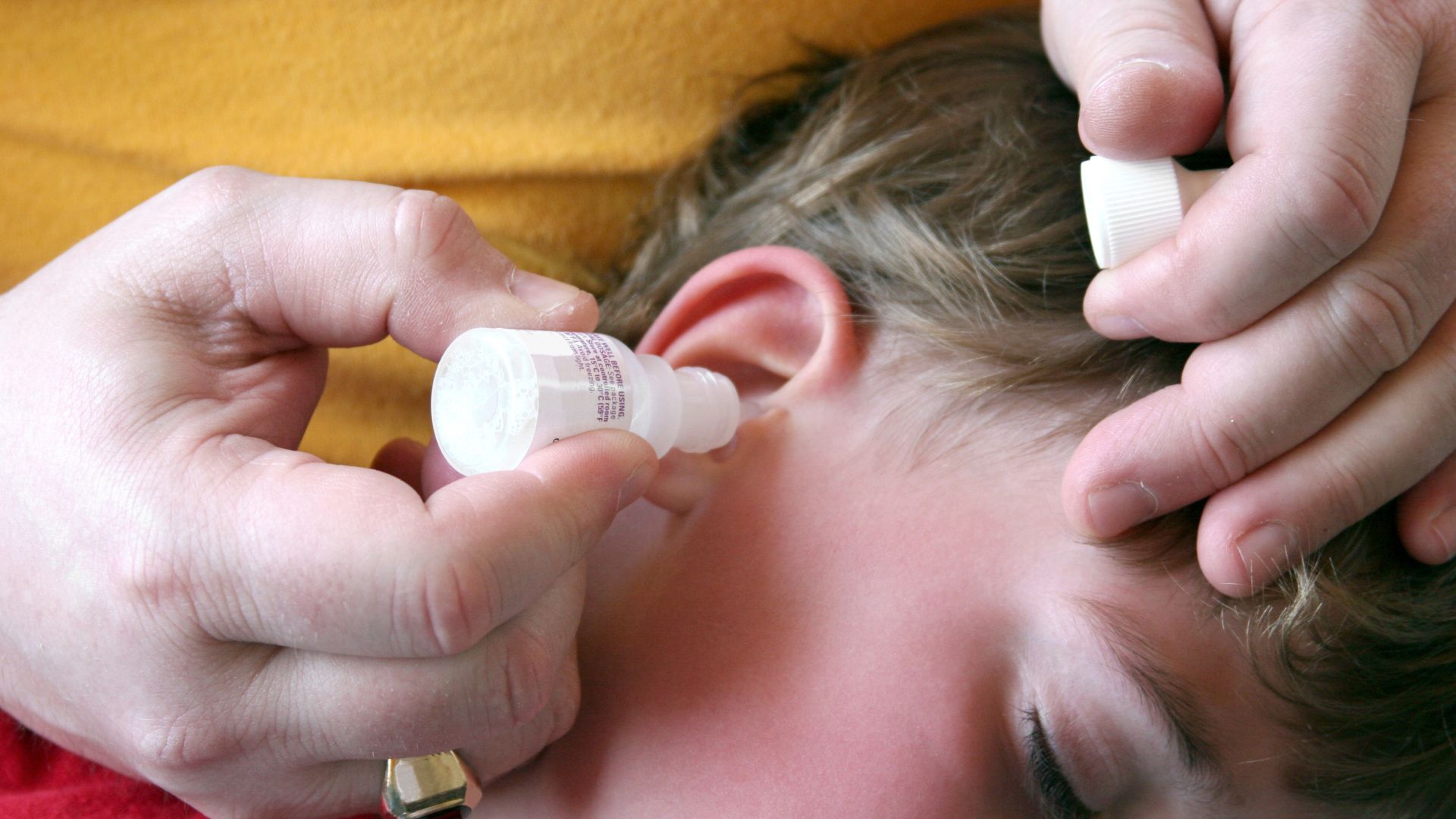
Express a few drops of breast milk (if you are breastfeeding) and, using a clean dropper, place them at the entrance of the baby’s ear canal (never deep inside).
Repeat every few hours while symptoms persist.
Precautions
Do this only if you are certain the eardrum hasn’t ruptured.
Consult your pediatrician before trying this remedy.
Garlic Oil Drops
Garlic is known for its natural antimicrobial and pain-relieving properties.
How to Use
Warm a small amount of garlic oil to body temperature.
Place a drop at the entrance of the ear canal (not deep inside) using a clean dropper.
Limit to once or twice daily.
Where to Find Garlic Oil
You can find garlic oil at most health food stores, or make your own by gently heating a smashed garlic clove in olive oil (don’t let it smoke or fry), then straining and cooling.
Precautions
Never use garlic oil if you suspect a ruptured eardrum.
Always test the oil’s temperature before use.
Consult your doctor before trying this remedy.
Olive Oil Drops
Olive oil may help soothe irritation in the ear canal.
How to Use
Warm a small amount of olive oil to body temperature.
Place a drop at the entrance of the ear canal with a clean dropper.
Use only once or twice per day.
Precautions
Avoid if there is any discharge from the ear, as this could indicate a ruptured eardrum.
Discuss with your pediatrician before use.
Probiotics
Probiotics, or “good bacteria,” may help boost your baby’s immune system and reduce the frequency of ear infections, especially in babies who have taken multiple courses of antibiotics.
How to Introduce Probiotics
Offer baby-safe probiotic supplements (consult your doctor for recommendations).
Breastfed babies benefit from probiotics in mother’s diet.
For formula-fed babies, look for formulas fortified with probiotics.
Foods Rich in Probiotics (for older babies)
Yogurt (plain, unsweetened, and pasteurized)
Kefir
Fermented vegetables (for toddlers)
Adequate Rest and Hydration
Ensuring your baby gets enough rest and fluids can help their body fight the infection and recover faster. Fluids thin mucus, aiding drainage from the Eustachian tubes.
Tips
Offer breast milk, formula, or water (for babies over six months) frequently.
Encourage naps and quiet time.
Over-the-Counter Pain Relief: What’s Safe?
Sometimes, pediatricians may recommend acetaminophen or ibuprofen to help manage your baby’s pain and fever.
Guidelines
Use only products specifically formulated for infants.
Follow dosing instructions carefully based on your baby’s weight and age.
Never give aspirin to children due to the risk of Reye’s syndrome.
Always check with your pediatrician before administering medication.
Preventing Ear Infections in Babies
Prevention is key. While not all ear infections can be avoided, these steps may reduce your baby’s risk:
Breastfeed if possible, as breast milk contains protective antibodies.
Hold your baby upright during feedings.
Avoid exposure to smoke and sick individuals.
Limit pacifier use after six months of age.
Keep up with vaccinations, including the flu and pneumococcal vaccines.
Practice good hygiene: Wash hands frequently and clean toys often.
Myths and Misconceptions about Home Remedies
Common Myths
Myth: All ear infections need antibiotics.
Fact: Many ear infections, especially viral ones, clear up without antibiotics.
Myth: Putting any oil into the ear is always safe.
Fact: Oil should never be used if the eardrum is ruptured or if there is drainage.
Myth: Ear infections are always caused by poor hygiene.
Fact: While hygiene helps prevent infection, anatomy and other factors play a big role.
Frequently Asked Questions
Q: Can I use essential oils for my baby’s ear infection?
A: Essential oils can be very potent and may irritate a baby’s sensitive skin or cause harm if used improperly. It is best to avoid essential oils in or around your baby’s ears unless directed by a healthcare professional.
Q: Is it safe to fly with a baby who has an ear infection?
A: Flying with an ear infection may be uncomfortable for your baby due to pressure changes. Consult your pediatrician before traveling by air if your child has an active ear infection.
Q: Will swimming cause ear infections?
A: Swimming can lead to swimmer’s ear (an outer ear infection), but middle ear infections usually result from colds or respiratory infections. Dry your baby’s ears thoroughly after swimming, and avoid swimming in dirty water.
Q: How long do ear infections last?
A: Most ear infections resolve within 2–3 days, but fluid may remain in the ear for up to several weeks. Persistent or recurrent infections require medical evaluation.
Conclusion
Ear infections in babiesare a common, often distressing issue for parents and little ones alike. Many home remedies, such as warm compresses, elevation, and gentle drops (with pediatrician approval), can provide comfort and support healing. However, it’s vital to remain vigilant for signs of more serious infection and to consult your doctor when needed. By combining safe home care with medical guidance, you can help your baby recover quickly and comfortably.
This article is for informational purposes only and should not be considered a substitute for professional medical advice. If you have concerns about your baby’s health, always consult your pediatrician.
A graduate of Computer Science and Information Management Technology. Diploma – Caregiving, Certificates – Dementia and Diabetes Awareness and Management. A researcher, blogger, songwriter, singer and acoustic guitarist. Born in an environment where natural talents such as healing are imparted at our natural birth. This natural talents of healing is the result of our genetic inheritance and the training from family environment.
Related Posts:
Urticaria Home Remedies Amazing Urticaria Home Remedies In order to grab immediate urticaria…
We use cookies on our website to give you the most relevant experience by remembering your preferences and repeat visits. By clicking “Accept All”, you consent to the use of ALL the cookies. However, you may visit "Cookie Settings" to provide a controlled consent.
This website uses cookies to improve your experience while you navigate through the website. Out of these, the cookies that are categorized as necessary are stored on your browser as they are essential for the working of basic functionalities of the website. We also use third-party cookies that help us analyze and understand how you use this website. These cookies will be stored in your browser only with your consent. You also have the option to opt-out of these cookies. But opting out of some of these cookies may affect your browsing experience.
Necessary cookies are absolutely essential for the website to function properly. These cookies ensure basic functionalities and security features of the website, anonymously.
Cookie
Duration
Description
cookielawinfo-checkbox-analytics
11 months
This cookie is set by GDPR Cookie Consent plugin. The cookie is used to store the user consent for the cookies in the category "Analytics".
cookielawinfo-checkbox-functional
11 months
The cookie is set by GDPR cookie consent to record the user consent for the cookies in the category "Functional".
cookielawinfo-checkbox-necessary
11 months
This cookie is set by GDPR Cookie Consent plugin. The cookies is used to store the user consent for the cookies in the category "Necessary".
cookielawinfo-checkbox-others
11 months
This cookie is set by GDPR Cookie Consent plugin. The cookie is used to store the user consent for the cookies in the category "Other.
cookielawinfo-checkbox-performance
11 months
This cookie is set by GDPR Cookie Consent plugin. The cookie is used to store the user consent for the cookies in the category "Performance".
viewed_cookie_policy
11 months
The cookie is set by the GDPR Cookie Consent plugin and is used to store whether or not user has consented to the use of cookies. It does not store any personal data.
Functional cookies help to perform certain functionalities like sharing the content of the website on social media platforms, collect feedbacks, and other third-party features.
Performance cookies are used to understand and analyze the key performance indexes of the website which helps in delivering a better user experience for the visitors.
Analytical cookies are used to understand how visitors interact with the website. These cookies help provide information on metrics the number of visitors, bounce rate, traffic source, etc.
Advertisement cookies are used to provide visitors with relevant ads and marketing campaigns. These cookies track visitors across websites and collect information to provide customized ads.