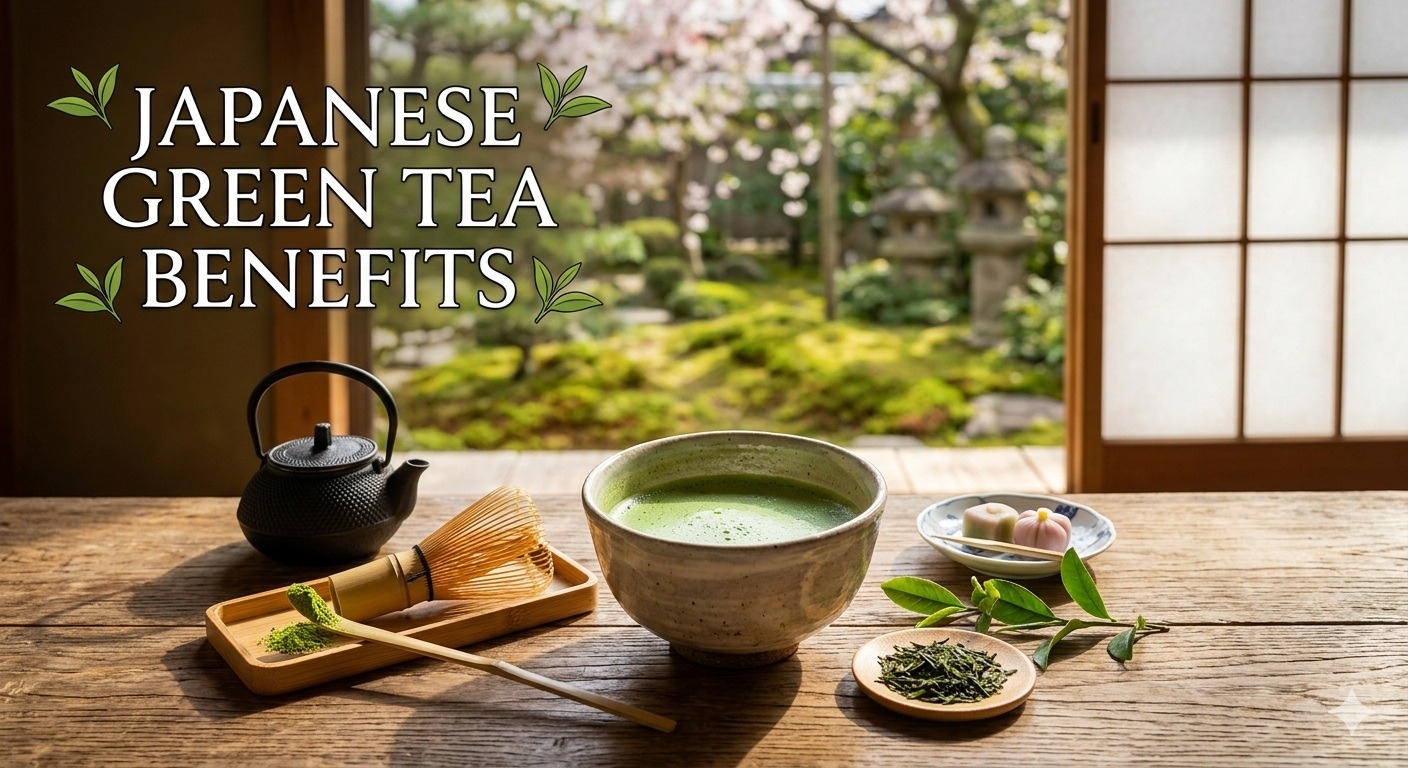
Discover the profound health rewards of Japan’s finest elixirs. From life-extending heart defense and sharp, jitter-free focus to glowing skin, explore the science-backed Japanese green tea benefits and learn how to brew the perfect cup for lifelong wellness.
In a fast-paced world, finding a moment of genuine calm that also fortifies your physical body can feel like an elusive goal. Yet, for centuries, Japanese culture has harbored a beautiful, daily ritual that achieves exactly that. From the misty, terraced hillsides of Shizuoka and Kyoto flows a vibrant, emerald elixir that is as much a medicine as it is a beverage.
When we explore the world of wellness, few lifestyle shifts yield as many scientifically backed rewards as adopting a daily tea ritual. At the heart of this ancient tradition are the profound Japanese green tea benefits, a treasure trove of health-promoting properties that modern science is only now beginning to fully decode.
Unlike Western tea traditions or heavily oxidized black teas, the delicate leaves of the Camellia sinensis plant in Japan undergo a unique processing method that locks in their raw molecular power. By gently steaming the leaves immediately after harvest, Japanese tea masters halt the oxidation process completely. This deliberate preservation ensures that every cup retains its vibrant green color, its rich savory notes, and its extraordinarily dense profile of life-extending compounds.
Whether you are looking to sharpen your mind, protect your cardiovascular system, support your digestive health, or simply slow down the aging process, the evidence supporting Japanese green tea benefits is both vast and compelling. In this comprehensive, deep-dive guide, we will unpack the fascinating science, the historical context, and the practical daily applications of Japan’s most celebrated wellness secret.
The Green Alchemy: Understanding the Bioactive Compounds
To truly appreciate the scope of Japanese green tea benefits, we must first look at the drink under a microscopic lens. What makes a simple leaf infusion so remarkably therapeutic? The secret lies in a pristine synergy of three primary bioactive elements: polyphenols, unique amino acids, and naturally occurring stimulants.
The Powerhouse Catechin: EGCG
The undisputed crown jewel of the green tea leaf is a group of water-soluble polyphenols called catechins. Among these, Epigallocatechin Gallate (EGCG) stands out as a true cellular guardian. EGCG is a highly potent antioxidant that neutralizes unstable molecules known as free radicals. Left unchecked, free radicals induce oxidative stress, causing cellular damage that accelerates premature aging and forms the foundation of chronic diseases.
Because Japanese green tea leaves are steamed rather than pan-fired or left to wither in the sun, their EGCG content remains incredibly pure. When you consume high-quality steamed teas, you are providing your cells with an active shield against daily environmental toxins.
L-Theanine: The Amino Acid of Calm Focus
Have you ever wondered why coffee can leave you feeling anxious and jittery, while green tea induces a state of quiet alertness? The answer is L-theanine, an amino acid found almost exclusively in the tea plant.
L-theanine crosses the blood-brain barrier and directly influences brain chemistry. It stimulates the production of alpha brain waves, which are associated with a state of “relaxed alertness”—the exact cognitive state achieved during deep meditation. Furthermore, L-theanine works in perfect tandem with caffeine. It slows down the absorption of caffeine in your bloodstream, smoothing out the typical energy spikes and crashes, and providing a sustained, jitter-free cognitive boost.
Essential Vitamins and Trace Minerals
Beyond these specialized organic compounds, a freshly brewed cup of green tea is a natural source of vital micro-nutrients. It contains:
Vitamin C: A natural immune supporter and skin structural aid.
Vitamin B2 (Riboflavin): Essential for maintaining healthy metabolic function and energy levels.
Vitamin E: A fat-soluble antioxidant that protects cellular membranes.
Fluorine & Saponins: Natural compounds that support oral hygiene and inhibit the growth of harmful bacteria in the mouth.
Cellular Defense: How Japanese Green Tea Benefits Cardiovascular Health
Cardiovascular disease remains one of the leading global health challenges. Thankfully, one of the most thoroughly documented Japanese green tea benefits is its profound ability to support heart health and optimize blood vessel function.
A massive, multi-decade epidemiological study conducted in Japan followed over 40,000 adults. The researchers discovered a striking correlation: individuals who consumed five or more cups of high-quality green tea daily experienced a 16% to 26% lower risk of death from cardiovascular causes compared to those who drank less than a cup a day.
Cardiovascular Risk Factor
How Japanese Green Tea Modulates It
LDL “Bad” Cholesterol
Inhibits lipid absorption in the gut and accelerates clearance.
Arterial Plaque Build-up
Prevents the oxidation of LDL particles, protecting arteries.
High Blood Pressure (Hypertension)
Relaxes smooth muscle tissues in blood vessels, improving flow.
The mechanism behind these heart-protective Japanese green tea benefits is multi-layered. First, the catechins actively inhibit the absorption of dietary cholesterol in the intestines while prompting the liver to clear excess lipids from the bloodstream. Second, green tea helps prevent LDL cholesterol from oxidizing.
When LDL oxidizes, it becomes sticky and adheres to arterial walls, forming dangerous plaques. By keeping these lipids stable, green tea maintains smooth, elastic, and clear pathways for your blood to travel.
Finally, the regular consumption of green tea has been shown to improve endothelial function—the ability of your blood vessels to dilate and constrict in response to blood flow. This natural relaxation of the vascular system helps maintain healthy blood pressure levels, significantly reducing the long-term strain on your heart.
Cognitive Enhancement: Protection for the Brain and Mind
The human brain is an incredibly resource-intensive organ, making it highly susceptible to oxidative damage and inflammation. Incorporating a premium brew into your routine unlocks significant neurological Japanese green tea benefits that protect your mind both in the short term and as you navigate the golden years of life.
Immediate Cognitive Sharpening
In the short term, the combination of caffeine and L-theanine functions as a natural, clean nootropic. While caffeine blocks adenosine (the neurotransmitter responsible for making you feel sleepy) and increases dopamine and norepinephrine levels, L-theanine ensures this process doesn’t overload your nervous system. Users frequently report a marked increase in working memory, faster reaction times, sustained focus during complex tasks, and a notable reduction in subjective anxiety.
Long-Term Neuroprotection
Looking toward the future, the structural Japanese green tea benefits on the brain become even more critical. Progressive cognitive decline, such as Alzheimer’s and Parkinson’s disease, is characterized by the accumulation of misfolded protein plaques (amyloid-beta) and severe cellular degradation in the brain.
Laboratory models and clinical observations indicate that the EGCG found in Japanese green tea can bind to these harmful protein fragments, preventing them from aggregating into destructive plaques. Moreover, green tea compounds help boost Brain-Derived Neurotrophic Factor (BDNF), a vital protein that stimulates the growth, maturation, and maintenance of new neurons. By fostering a highly fertile neurological environment, regular tea consumption helps preserve cognitive reserve and shields the brain against age-related decline.
Metabolic Health: Longevity and Blood Sugar Regulation
Metabolic disorders, particularly Type 2 diabetes and metabolic syndrome, have grown exponentially over the last few decades due to shifting modern diets. Fortunately, stabilizing your internal metabolic markers is another area where Japanese green tea benefits shine brightly.
When you drink green tea alongside or after a meal, its active polyphenols gently inhibit an enzyme called alpha-glucosidase, which breaks down carbohydrates into simple sugars. By slowing down this digestive step, green tea prevents the sharp, rapid spikes in blood glucose that force your pancreas to pump out massive amounts of insulin.
Over time, keeping your blood sugar stable helps reverse insulin resistance—a condition where your body’s cells become numb to insulin’s signals. Improved insulin sensitivity means your body can efficiently convert food into clean energy rather than storing it away as stubborn visceral fat.
For individuals managing pre-diabetes or looking to maintain clean metabolic health, a daily cup of Japanese green tea offers a simple, natural strategy for internal balance.
Radiant Skin and Oral Health: The External Reflection
True wellness always radiates outward, and the physical beauty improvements linked to Japanese green tea benefits are a direct testament to its internal cleansing properties.
Dermatological Protection
Your skin is constantly bombarded by external stressors, most notably ultraviolet (UV) radiation from the sun and atmospheric pollution. These factors trigger a cascade of inflammation and break down collagen, leading to premature wrinkles, hyperpigmentation, and loss of skin elasticity.
Because Japanese green tea is so uniquely concentrated with anti-inflammatory compounds, consuming it regularly provides systematic defense for your skin cells. The polyphenols help repair damaged cellular DNA and curb the production of pro-inflammatory enzymes that trigger chronic skin flare-ups.
Clinical reviews suggest that both drinking green tea and applying its extracts topically can help manage acne breakouts by reducing excess sebum (oil) production, smoothing out skin texture, and promoting a natural, healthy glow.
Advanced Oral Hygiene
Interestingly, the defensive nature of Japanese green tea benefits extends right into your mouth. The naturally occurring catechins and saponins act as mild, organic antimicrobials. They directly target Streptococcus mutans, the primary bacterium responsible for oral plaque formation, tooth decay, and cavities.
By suppressing the growth and adhesive capabilities of these harmful bacteria, drinking green tea unflavored protects your gums from periodontal disease. Furthermore, green tea possesses natural deodorizing properties. It neutralizes volatile sulfur compounds in the mouth, offering a clean, fresh breath solution that traditional, sugar-laden mints simply cannot replicate.
Navigating the Exquisite Varieties of Japanese Green Tea
To fully unlock the diverse spectrum of Japanese green tea benefits, it helps to understand that Japanese tea is not a monolithic category. Depending on how the plants are grown, harvested, and processed, different varieties offer unique flavor experiences and specialized concentrations of wellness compounds.
The major types of authentic Japanese green tea include:
Sencha (The Sun-Drenched Classic)
Sencha represents the absolute baseline of Japanese tea culture, accounting for the vast majority of the country’s total production. Grown fully exposed to the open sunlight, Sencha leaves develop a beautiful balance of brisk astringency, bright vegetal notes, and a refreshing, clean finish. Because it receives full sunlight, the amino acids in the leaves naturally convert into catechins, making Sencha an incredibly potent source of free-radical-fighting antioxidants and EGCG.
Matcha (The Whole-Leaf Powerhouse)
Matcha is a vibrant, stone-ground green tea powder made from shade-grown leaves called Tencha. Because you whisk the powder directly into hot water rather than discarding the leaves after steeping, you consume the entire tea leaf. This means a single serving of Matcha delivers a highly concentrated dose of vitamins, fiber, and up to three times the amount of antioxidants found in a standard cup of brewed tea. Its flavor is deeply complex, velvety, and packed with savory richness.
Gyokuro (The Precious Jade Dew)
Gyokuro is widely considered one of Japan’s most luxurious and prized creations. Approximately three weeks before the spring harvest, farmers cover the entire tea field with special shading mats to block out roughly 90% of the sunlight. Cut off from direct light, the tea plant frantically produces massive amounts of chlorophyll and stops converting its amino acids into bitter catechins. The result is a deep jade leaf overflowing with L-theanine, yielding a brothy, intensely savory umami flavor profile that completely redefines what tea can taste like.
Hojicha (The Toasty, Gentle Brew)
If you love cozy, comforting flavors or are highly sensitive to stimulants, Hojicha is an exceptional choice. It is made by taking later-harvest green tea leaves and roasting them over high heat. This thermal roasting process turns the leaves a deep, rich brown color and transforms the flavor profile into something beautifully toasty, nutty, and slightly sweet. More importantly, the intense heat alters the caffeine molecules, leaving Hojicha exceptionally low in caffeine—making it an ideal, stomach-soothing option for children, elderly individuals, or a relaxing evening nightcap.
The Art of Brewing: Maximizing Flavor and Nutrition
You could buy the most pristine, award-winning tea leaves in the world, but if you expose them to boiling water and leave them to steep indefinitely, you will ruin both the delicate flavor and the structural integrity of the nutrients. Extracting the optimal Japanese green tea benefits requires a mindful approach to water temperature and timing.
When green tea leaves face boiling water (1000C or 2120F) the delicate catechins and volatile oils break down rapidly, releasing an overwhelming wave of intense bitterness and astringency. To preserve the sweet, savory, and therapeutic qualities of your leaves, follow this elegant preparation matrix:
Tea Variety
Ideal Temperature
Steeping Duration
Sencha
70°C – 80°C
60 Seconds
Gyokuro
50°C – 60°C
90 – 120 Seconds
Hojicha
90°C – 95°C
30 Seconds
Matcha
80°C
Whisk Immediately
Step-by-Step Infusion Ritual
Cool Your Water: Bring your fresh, filtered water to a brief boil, then pour it into an empty ceramic pitcher or your serving cups first. Every time hot water is transferred to a cool vessel, its temperature naturally drops by roughly $5^\circ\text{C}$ to $10^\circ\text{C}$.
Measure with Intention: Use approximately one teaspoon of loose-leaf tea (around 2 to 3 grams) for every 6 to 8 ounces of water.
Respect the Clock: Pour the cooled water over your leaves and let them steep undisturbed. Avoid the temptation to stir or squeeze the leaves.
The Final Drop: When pouring the tea into your cup, do so in short, alternating increments if serving multiple guests. Ensure that you pour out every single drop from the teapot. The final drops contain the most highly concentrated umami and nutrient compounds, and leaving water in the pot will over-steep your leaves for the next infusion. Most high-quality Japanese green teas can be enjoyed for 3 to 4 distinct, beautiful steepings.
Making It a Lifestyle: Practical Integration for Long-Term Wellness
Embracing the spectrum of Japanese green tea benefits doesn’t require a complete overhaul of your current routine. Instead, it is about replacing empty, unfulfilling habits with a mindful, nutrient-dense practice.
A Mindful Morning Transition
If you find that your first cup of morning coffee leaves you feeling anxious, hyperactive, or prone to a severe mid-afternoon energy crash, try swapping it for a warm bowl of whisked Matcha or a crisp cup of Sencha. The unique L-theanine and caffeine matrix will provide a steady, clean cognitive runway for your workday without triggering corporate burnout or adrenal fatigue.
The Afternoon Cleanse
Around 2:00 PM, when the post-lunch sluggishness sets in, our instinct is often to reach for sugary snacks, energy drinks, or processed sodas. Preparing a quick, refreshing iced Japanese green tea instead can revitalize your senses, rehydrate your system, stabilize your moving blood sugar levels, and keep your metabolism burning cleanly through the rest of your responsibilities.
Sourcing with Integrity
To ensure you are receiving the purest version of these health attributes, pay close attention to where your tea originates. Look for brands that explicitly state their harvest location within Japan (such as Uji in Kyoto, Shizuoka, or Kagoshima) and verify that they package their teas in airtight, opaque pouches. Because catechins and delicate vitamins degrade when exposed to prolonged oxygen and light, keeping your tea properly stored in a cool, dark pantry guarantees that every cup you brew remains vibrant, delicious, and deeply restorative.
Conclusion On Japanese Green Tea Benefits
A Cup of Ageless Wisdom
At its core, drinking Japanese green tea is an act of profound self-care. It represents a beautiful convergence where ancient, time-tested heritage meets the rigorous validation of modern clinical medicine. The immense Japanese green tea benefits—ranging from life-extending cardiovascular defense and immediate cognitive sharpening to metabolic stabilization and radiant, ageless skin—demonstrate that true health doesn’t have to be complicated or unapproachable.
By stepping away from synthetic wellness trends and returning to the pure simplicity of a steamed green leaf, you are investing in a sustainable path toward longevity. Bring home a bag of authentic Japanese tea, heat your water with care, pour yourself a vibrant green cup, and savor the timeless gift of holistic vitality.
A graduate of Computer Science and Information Management Technology. Diploma – Caregiving, Certificates – Dementia and Diabetes Awareness and Management. A researcher, blogger, songwriter, singer and acoustic guitarist. Born in an environment where natural talents such as healing are imparted at our natural birth. This natural talents of healing is the result of our genetic inheritance and the training from family environment.
We use cookies on our website to give you the most relevant experience by remembering your preferences and repeat visits. By clicking “Accept All”, you consent to the use of ALL the cookies. However, you may visit "Cookie Settings" to provide a controlled consent.
This website uses cookies to improve your experience while you navigate through the website. Out of these, the cookies that are categorized as necessary are stored on your browser as they are essential for the working of basic functionalities of the website. We also use third-party cookies that help us analyze and understand how you use this website. These cookies will be stored in your browser only with your consent. You also have the option to opt-out of these cookies. But opting out of some of these cookies may affect your browsing experience.
Necessary cookies are absolutely essential for the website to function properly. These cookies ensure basic functionalities and security features of the website, anonymously.
Cookie
Duration
Description
cookielawinfo-checkbox-analytics
11 months
This cookie is set by GDPR Cookie Consent plugin. The cookie is used to store the user consent for the cookies in the category "Analytics".
cookielawinfo-checkbox-functional
11 months
The cookie is set by GDPR cookie consent to record the user consent for the cookies in the category "Functional".
cookielawinfo-checkbox-necessary
11 months
This cookie is set by GDPR Cookie Consent plugin. The cookies is used to store the user consent for the cookies in the category "Necessary".
cookielawinfo-checkbox-others
11 months
This cookie is set by GDPR Cookie Consent plugin. The cookie is used to store the user consent for the cookies in the category "Other.
cookielawinfo-checkbox-performance
11 months
This cookie is set by GDPR Cookie Consent plugin. The cookie is used to store the user consent for the cookies in the category "Performance".
viewed_cookie_policy
11 months
The cookie is set by the GDPR Cookie Consent plugin and is used to store whether or not user has consented to the use of cookies. It does not store any personal data.
Functional cookies help to perform certain functionalities like sharing the content of the website on social media platforms, collect feedbacks, and other third-party features.
Performance cookies are used to understand and analyze the key performance indexes of the website which helps in delivering a better user experience for the visitors.
Analytical cookies are used to understand how visitors interact with the website. These cookies help provide information on metrics the number of visitors, bounce rate, traffic source, etc.
Advertisement cookies are used to provide visitors with relevant ads and marketing campaigns. These cookies track visitors across websites and collect information to provide customized ads.