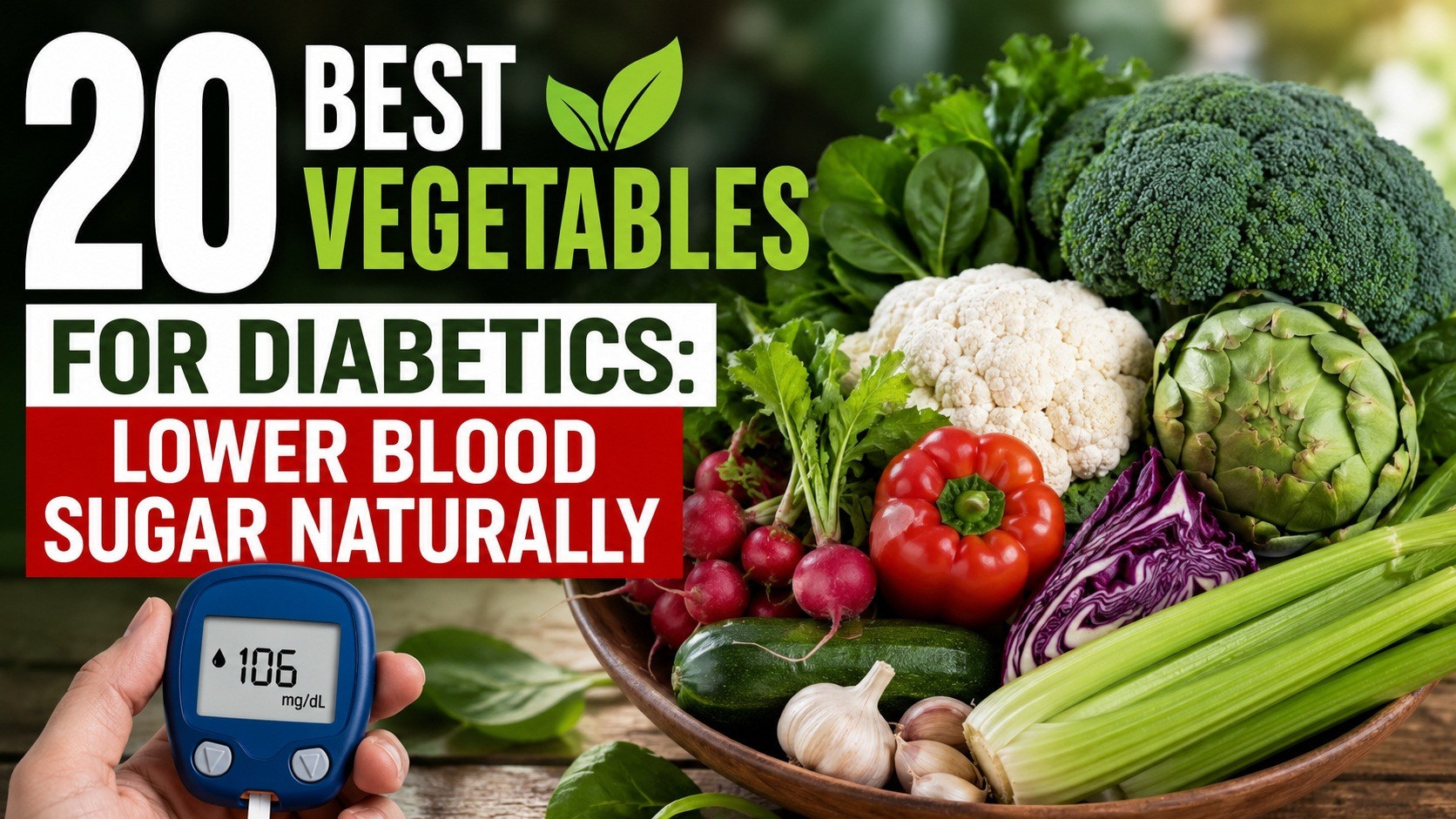
20 Best Vegetables for Diabetics: Lower Blood Sugar Naturally20 Best Vegetables for Diabetics: Lower Blood Sugar Naturally
20 Best Vegetables for Diabetics: Lower Blood Sugar Naturally
The Million-Dollar Mistake in Your Kitchen: Stop what you are doing right now and look at the last thing you ate. Did that meal protect your blood vessels, or did it send your blood sugarclimbing up a metabolic roller coaster that you can’t get off of?
Every single day, millions of people living with type 2 diabetes, prediabetes, or insulin resistance make a catastrophic mistake. They believe that managing their A1C means eating a depressing, tasteless diet filled with dry cardboard-like foods. They live in constant fear of the glucose monitor.
But what if I told you that prominent endocrinologists and top researchers have discovered a green pharmacy hiding right in plain sight inside your local grocery store? What if you could eat hearty, incredibly delicious meals that actually mimic the exact behavior of front-line diabetes medications?
Welcome back to My Emerald Health, your ultimate headquarters for cutting-edge natural wellness and evidence-based nutrition. Today, we are pulling back the curtain on the absolute definitive guide to metabolic reversal. We are counting down the top twenty absolute best vegetables for diabetics, backed by peer-reviewed clinical trials and world-renowned medical experts.
We aren’t just giving you a superficial list. We are breaking down the hard molecular biochemistry of how these foods alter your cellular pathways. And because we want to make this journey effortless for you, we have placed links to our favorite recommended kitchen tools, blood sugartracking kits, and high-quality organic vegetable supplements right down in the description box below. Make sure to check those out during this video.
If you want to protect your kidneys, save your eyesight, and reclaim your daily energy, you cannot afford to turn this video off. Let’s reveal the ultimate twenty.
The Core 11
Let’s begin with eleven non-negotiable foundational vegetables that must be in your kitchen immediately. If you have been following our community health blueprints or referenced our master visual guide you will recognize these core eleven. But let’s look at the incredible science that makes them mandatory.
Number 1: Leafy Greens.
We begin with the absolute royalty of the plant kingdom: dark, leafy greens like spinach, kale, and Swiss chard. Many doctors, including Dr. Neal Barnard, founding president of the Physicians Committee for Responsible Medicine, have demonstrated that heavy plant-based diets rich in greens can aggressively reduce insulin resistance.
A massive study published in the British Medical Journal analyzed multiple pieces of research and concluded that eating just one and a half extra servings of leafy greens per day reduces your risk of developing type 2 diabetes by a staggering fourteen percent. The secret lies in their immense magnesium content. Magnesium acts as a cellular key, unlocking your insulin receptors so glucose can easily slide out of your blood and into your muscles.
Number 2: Broccoli.
Next is broccoli, a cruciferous titan that contains a spectacular compound called sulforaphane. A landmark clinical study spearheaded by Dr. Annika Axelsson at Lund University and published in Science Translational Medicine discovered something mind-blowing.
Researchers found that concentrated sulforaphane actually alters gene expression in the liver, suppressing hepatic glucose production. In fact, it lowered fasting blood sugar in obese diabetic patients by up to ten percent—acting in a pathway strikingly similar to the front-line drug metformin.
Number 3: Cauliflower.
Right alongside broccoli is the ultimate low-carb shapeshifter: cauliflower. Dr. Mark Hyman, a leading figure in functional medicine, frequently points out that the real driver of diabetes is high-glycemic carbohydrates like white flour, rice, and potatoes.
Cauliflowerallows you to completely hack your psychology. Because it is highly abundant in dietary fiber and exceptionally low in starch, you can use it to create low-glycemic mashed “potatoes” or riced cauliflower. It entirely prevents the post-meal glucose spikes that destroy your blood vessels while keeping your brain completely satisfied.
Number 4: Carrots.
Now, let’s bust a massive, dangerous myth that floats around the internet. Many people think carrots are too sweet for diabetics. This is fundamentally incorrect. Carrotspossess a very low glycemic load because their natural sugars are tightly bound within a dense matrix of water and structural fiber. But here is the scientific kicker: carrots are packed with beta-carotene.
A study published in the journal Nutrition, Metabolism and Cardiovascular Diseases revealed that individuals with higher circulating levels of carotenoids have significantly higher insulin sensitivity. Don’t fear the carrot; look at it as metabolic medicine.
Number 5: Tomatoes.
Tomatoesare an absolute necessity because of a powerful, lipid-soluble antioxidantcalled lycopene. According to Dr. Joel Fuhrman, author of The End of Diabetes, cardiovascular disease is the single greatest threat to anyone dealing with high blood sugar. A study published in Frontiers in Nutrition confirmed that lycopene radically reduces lipid peroxidation, lowering bad LDL cholesterol and protecting the delicate endothelial lining of your arteries. When you cook tomatoes, the heat actually unlocks more lycopene, making homemade sugar-free tomato sauces a true shield for your heart.
Number 6: Cucumbers.
Hydration is a massive, secret weapon in diabetes management. When your blood sugar rises, your kidneys go into overdrive to flush out the excess glucose through urine, making you severely dehydrated. Cucumbersare over ninety-five percent structured water, making them ultimate hydrators.
But a study published in the Journal of Medicinal Food indicated that compounds within cucumbers exhibit an anti-hyperglycemic effect, helping to down-regulate blood glucose levels and even protect against the oxidative stress associated with diabetes complications.
Number 7: Peppers.
Whether you like them fiery hot or sweet and crunchy like bell peppers, these colorful pods are unmatched. Bell peppers contain more vitamin C than an orange. Dr. Richard Bernstein, a pioneer in low-carbohydrate diabetes management, emphasizes that vitamin C is a premier weapon against advanced glycation end-products, or AGEs, which cause cellular aging and nerve damage in diabetics. The high fiber and massive antioxidant profile of peppers keep systemic inflammation to an absolute minimum.
Number 8: Mushrooms.
Mushroomshave a glycemic index that is virtually zero, making them an incredibly safe food. But their true power rests in a specific type of polysaccharide called beta-glucans. Research published in the International Journal of Molecular Sciences highlights that beta-glucans act as powerful immunomodulators and metabolic regulators, significantly improving insulin sensitivity and slowing down the rate of carbohydrate absorption in the small intestine.
Number 9: Eggplant.
Eggplant is a gorgeous vegetable whose deep purple skin holds a profound health secret. That purple hue is caused by anthocyanins, specifically an antioxidant called nasunin.
A study published in the Journal of Agricultural and Food Chemistry revealed that anthocyanins are highly potent inhibitors of alpha-glucosidase—the exact same enzyme that commercial type 2 diabetes medications target to slow down the breakdown of starch into sugar. Eating eggplant literally slows down sugar absorption right at the intestinal level.
Number 10: Green Beans.
Green beans are a phenomenal source of both soluble and insoluble fiber. Soluble fiber forms a gel-like substance in your digestive tract that slows down digestion, ensuring that your energy release is slow, steady, and entirely predictable. A study in the Journal of Clinical Nutrition confirmed that high dietary fiber intake is directly correlated with lower hemoglobin A1C levels and vastly improved glycemic control.
Number 11: Onions.
Closing out our core eleven are onions. Onions contain a unique volatile oil called allyl propyl disulfide, alongside a famous flavonoid called quercetin. Clinical research published in the journal Environmental Health Insights showed that when type 1 and type 2 diabetic patients consumed fresh crude onions, it led to a significant reduction in fasting blood glucose levels.
Onions help increase the biological availability of free insulin, making your body infinitely more efficient at clearing sugar out of your bloodstream.
PART 2: Beyond the Basics — 9 More Elite Superfoods
Now that we have covered the core eleven from our master graphic, let’s go even deeper. If you want to maximize your protection, you need to add these nine elite superfood vegetables to your dietary rotation immediately.
Number 12: Asparagus.
Asparagusis an absolute masterclass in metabolic protection. A study published in the British Journal of Nutrition discovered that asparagus extract significantly improves insulin secretion from the pancreas while enhancing the functional activity of beta-cells.
It’s also loaded with chromium, a trace mineral that acts as a co-factor for insulin, helping it ferry glucose out of your blood and into your cells with absolute ease.
Number 13: Brussels Sprouts.
If you are terrified of diabetic nerve damage, Brussels sprouts are your best friend. They contain an extraordinary concentration of an antioxidant called alpha-lipoic acid, or ALA.
Renowned neurologist Dr. David Perlmutter often discusses how ALA has been successfully used in clinical settings to reduce diabetic neuropathy, ease burning foot pain, and drastically increase insulin sensitivity across the board.
Number 14: Cabbage.
Cabbage is one of the most affordable vegetables you can buy, yet it is packed with nutrients that can support overall health. Research published in Evidence-Based Complementary and Alternative Medicine found that red cabbage extract significantly lowered blood glucose levels and even helped improve kidney function in diabetic rats. While these findings come from animal studies and more human research is needed, they suggest that compounds in red cabbage may have promising blood sugar-supporting properties.
Beyond its antioxidant content, cabbage is also rich in dietary fiber, which slows the digestion and absorption of carbohydrates. This helps prevent sudden spikes in blood sugar after meals, promotes longer-lasting fullness, and supports healthy digestion. Whether eaten raw in salads, lightly steamed, or added to soups and stir-fries, cabbage is a budget-friendly, nutrient-dense vegetable that deserves a regular place on your plate.
Number 15: Garlic.
Although commonly used as a seasoning, garlic is botanically classified as a vegetable and is widely recognized for its impressive medicinal properties. One of its most powerful compounds is allicin, which is formed when fresh garlic is chopped, crushed, or chewed. Allicin is known for its antioxidant and anti-inflammatory effects, which may contribute to better metabolic and cardiovascular health.
A comprehensive meta-analysis of randomized controlled trials published in Food & Nutrition Research found that regular garlic supplementation significantly reduced both fasting blood glucose and HbA1c—a marker of long-term blood sugar control—over a 12-week period.
In addition to supporting healthy blood sugar levels, garlic has also been shown to improve cholesterol and triglyceride levels, helping to optimize the overall lipid profile and promote better heart health. Adding fresh garlic to soups, sauces, roasted vegetables, or other meals is an easy and flavorful way to enjoy its potential health benefits as part of a balanced diet.
Number 16: Zucchini.
Zucchini is a versatile, low-carbohydrate vegetable that makes an excellent addition to a diabetes-friendly diet. Because it is naturally low in calories and digestible carbohydrates, it has very little impact on blood sugar levels while still providing fiber, vitamins, and minerals. It’s also an easy substitute for higher-carb foods, such as pasta, helping you reduce your overall carbohydrate intake without sacrificing meal satisfaction.
Another standout benefit of zucchini is its content of lutein and zeaxanthin, two powerful carotenoids that support eye health. These antioxidants accumulate in the retina, where they help filter harmful blue light and protect the eyes from oxidative damage. Since people with diabetes have a higher risk of developing eye conditions such as diabetic retinopathy, consuming foods rich in these nutrients may help support long-term vision health.
Nutrition experts, including Michael Greger, frequently highlight the importance of eating carotenoid-rich vegetables as part of a healthy diet. Whether grilled, roasted, sautéed, or spiralized into “zoodles,” zucchini is a delicious and nutrient-dense way to support both blood sugar management and overall health.
Number 17: Okra.
Okrahas long been valued in traditional medicine across parts of Africa and Asia for its potential to support healthy blood sugar levels. While it is not a cure for diabetes, it is a highly nutritious vegetable that may play a helpful role as part of a balanced diet.
One of its most distinctive features is the thick, gel-like substance known as mucilage, which is released when the pods are sliced. This mucilage is rich in soluble fiber, a type of fiber that slows digestion and the absorption of carbohydrates.
Research published in the Journal of Nutritional Biochemistry suggests that certain compounds in okra may help reduce the absorption of glucose and cholesterol in the intestines, potentially minimizing sharp spikes in blood sugar after meals. Its combination of soluble fiber, antioxidants, and essential nutrients also supports digestive health and heart health.
Although more human studies are needed to fully understand its effects, regularly including okra in soups, stews, or stir-fries can be a simple and nutritious way to support overall metabolic health.
Number 18: Radishes.
Radishes are a crisp, flavorful root vegetable that are naturally low in calories and carbohydrates, making them an excellent choice for people looking to maintain healthy blood sugar levels. With their low glycemic impact and high water content, they add satisfying crunch and freshness to meals without causing significant spikes in blood glucose.
These vibrant vegetables are also rich in beneficial plant compounds, including glucosinolates and isothiocyanates, which are known for their antioxidant and anti-inflammatory properties. Some research suggests that these compounds may help stimulate the production of adiponectin, a hormone that plays an important role in regulating blood sugar and fat metabolism.
Higher adiponectin levels are associated with improved insulin sensitivity and a lower risk of insulin resistance, both of which are important for maintaining a healthy metabolism. While more human studies are needed to confirm these effects, regularly adding radishes to salads, sandwiches, or vegetable platters is a simple way to boost your intake of fiber, antioxidants, and other health-supporting nutrients.
Number 19: Celery.
Celery is one of the lowest-calorie vegetables you can eat, making it a great addition to a balanced, diabetes-friendly diet. It is naturally low in carbohydrates and starch while providing water, fiber, vitamins, and minerals. Because of its low carbohydrate content, celery generally has only a minimal effect on blood sugar levels, making it an excellent snack or side dish for people looking to support healthy glucose control.
One of celery’s standout nutrients is apigenin, a naturally occurring flavonoid with potent antioxidant and anti-inflammatory properties. Research suggests that apigenin may help reduce inflammation and protect blood vessels from oxidative stress, which is especially important for people with diabetes who have a higher risk of cardiovascular disease and damage to small blood vessels over time.
While celery alone cannot prevent these complications, incorporating it into a diet rich in vegetables can contribute to better heart and metabolic health. Enjoy celery raw with healthy dips, chopped into salads, or added to soups and stir-fries for a refreshing and nutritious boost.
Number 20: Artichokes.
Saving one of the best for last, artichokes are a nutritional powerhouse that can be an excellent addition to a healthy eating plan. They are among the richest natural sources of inulin, a type of soluble prebiotic fiber that is not digested in the small intestine. Instead, it travels to the colon, where it serves as food for beneficial gut bacteria, helping to maintain a diverse and healthy gut microbiome.
Research published in the Journal of Traditional and Complementary Medicine highlights the important role of inulin in supporting the growth of beneficial gut microbes, which can contribute to better digestive and metabolic health. A healthy gut microbiome has been linked to improved insulin sensitivity, reduced inflammation, and better blood sugar regulation.
Physicians such as Jason Fung have frequently discussed the growing evidence connecting gut health with metabolic health, although it is important to note that improving the microbiome is just one part of managing or preventing type 2 diabetes.
In addition to their prebiotic fiber, artichokes are rich in antioxidants, vitamins, and minerals, including vitamin C, vitamin K, folate, magnesium, and potassium. Their high fiber content also promotes fullness, supports healthy digestion, and helps slow the absorption of carbohydrates, which may reduce blood sugar spikes after meals.
Whether steamed, roasted, grilled, or added to salads and pasta dishes, artichokes are a delicious, nutrient-dense vegetable that supports both gut health and overall metabolic wellness.
The Doorway to Reversal
There you have it: twenty extraordinary, scientifically validated, nutrient-dense vegetables that can completely rewrite your medical story. Managing your blood sugar is not about starvation or living a life of painful restriction. It is about an abundance mindset. It is about flooding your body with these twenty incredible superfoods that actively heal your cells, protect your organs, and give your pancreas the rest it desperately deserves.
Now, we want to make this as seamless as possible for you. If you are wondering how to easily incorporate these foods into your life, or looking for premium vegetable extracts and top-tier organic supplements, we have curated a list of highly recommended products. The links are right down in the description box below. Clicking those links helps support our channel so we can continue bringing you this life-changing research.
Which of these twenty vegetables are you putting on your grocery list today? Let us know down in the comments—we read and reply to every single one!
If this video brought you immense value, please smash that like button, subscribe to My Emerald Health, and hit that notification bell so you never miss our masterclasses on natural healing. Share this video with a loved one who is fighting to bring their A1C down. Thank you so much for watching. Stay dedicated, stay vibrant, and we will see you in the very next video.
OFFICIAL MEDICAL DISCLAIMER
The information provided in this video by My Emerald Health is for educational and informational purposes only and should not be construed as medical advice, diagnosis, or treatment. Always consult with a qualified healthcare professional, physician, or endocrinologist before making any changes to your diet, medication, or healthcare routine, especially if you are managing a chronic condition like type 1 or type 2 diabetes. Never disregard professional medical advice or delay seeking it because of something you have heard in this video.
A graduate of Computer Science and Information Management Technology. Diploma – Caregiving, Certificates – Dementia and Diabetes Awareness and Management. A researcher, blogger, songwriter, singer and acoustic guitarist. Born in an environment where natural talents such as healing are imparted at our natural birth. This natural talents of healing is the result of our genetic inheritance and the training from family environment.
We use cookies on our website to give you the most relevant experience by remembering your preferences and repeat visits. By clicking “Accept All”, you consent to the use of ALL the cookies. However, you may visit "Cookie Settings" to provide a controlled consent.
This website uses cookies to improve your experience while you navigate through the website. Out of these, the cookies that are categorized as necessary are stored on your browser as they are essential for the working of basic functionalities of the website. We also use third-party cookies that help us analyze and understand how you use this website. These cookies will be stored in your browser only with your consent. You also have the option to opt-out of these cookies. But opting out of some of these cookies may affect your browsing experience.
Necessary cookies are absolutely essential for the website to function properly. These cookies ensure basic functionalities and security features of the website, anonymously.
Cookie
Duration
Description
cookielawinfo-checkbox-analytics
11 months
This cookie is set by GDPR Cookie Consent plugin. The cookie is used to store the user consent for the cookies in the category "Analytics".
cookielawinfo-checkbox-functional
11 months
The cookie is set by GDPR cookie consent to record the user consent for the cookies in the category "Functional".
cookielawinfo-checkbox-necessary
11 months
This cookie is set by GDPR Cookie Consent plugin. The cookies is used to store the user consent for the cookies in the category "Necessary".
cookielawinfo-checkbox-others
11 months
This cookie is set by GDPR Cookie Consent plugin. The cookie is used to store the user consent for the cookies in the category "Other.
cookielawinfo-checkbox-performance
11 months
This cookie is set by GDPR Cookie Consent plugin. The cookie is used to store the user consent for the cookies in the category "Performance".
viewed_cookie_policy
11 months
The cookie is set by the GDPR Cookie Consent plugin and is used to store whether or not user has consented to the use of cookies. It does not store any personal data.
Functional cookies help to perform certain functionalities like sharing the content of the website on social media platforms, collect feedbacks, and other third-party features.
Performance cookies are used to understand and analyze the key performance indexes of the website which helps in delivering a better user experience for the visitors.
Analytical cookies are used to understand how visitors interact with the website. These cookies help provide information on metrics the number of visitors, bounce rate, traffic source, etc.
Advertisement cookies are used to provide visitors with relevant ads and marketing campaigns. These cookies track visitors across websites and collect information to provide customized ads.