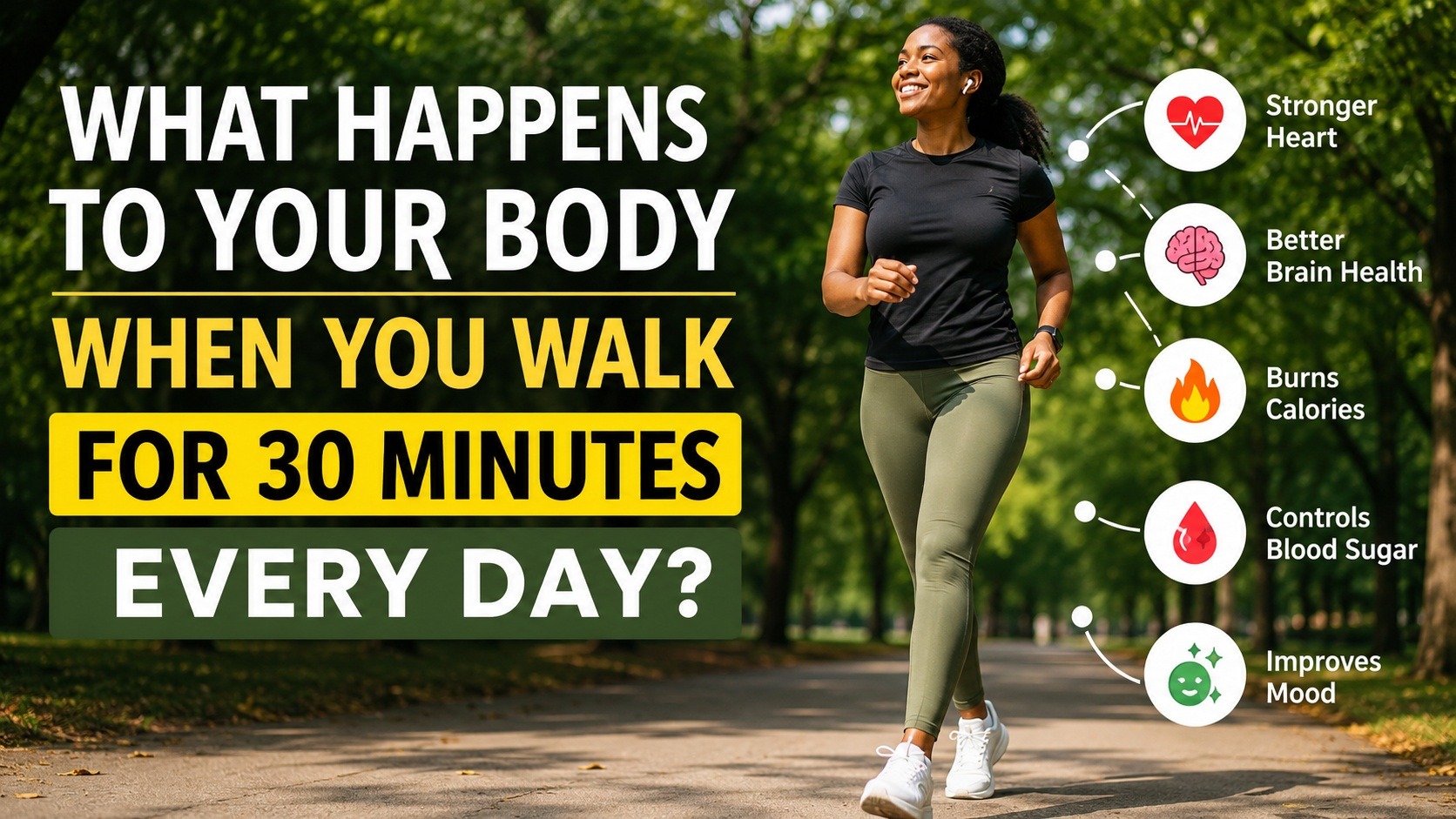
What Happens to Your Body When You Walk for 30 Minutes Every Day?
What Happens to Your Body When You Walk for 30 Minutes Every Day? The Surprising Science Behind This Simple Habit
Discover what happens to your body when you walk for 30 minutes every day. Learn the science-backed benefits for your heart, brain, metabolism, sleep, weight loss, and overall health.
Walking is one of the simplest things you can do for your health. It doesn’t require a gym membership, expensive equipment, or complicated workout routines. Yet, this everyday activity has the power to improve your heart, brain, muscles, metabolism, and even your mood.
What if just 30 minutes of walking every day could help you feel healthier, think more clearly, sleep better, and lower your risk of chronic diseases?
It may sound too good to be true, but decades of scientific research continue to show that regular walking is one of the most effective forms of moderate exercise. Whether you’re looking to lose weight, improve your cardiovascular health, or simply stay active as you age, walking is an excellent place to start.
In this article, we’ll explore exactly what happens inside your body when you walk for 30 minutes every day and share practical tips to help you get the most out of every step.
Your Heart Becomes Stronger
The first organ to benefit from a daily walk is your heart.
As soon as you begin walking, your heart beats slightly faster to pump oxygen-rich blood throughout your body. This natural response helps improve circulation and ensures your muscles and organs receive the oxygen they need.
Over time, consistent walking strengthens your heart muscle, allowing it to pump blood more efficiently. Regular walking has also been associated with:
Think of your heart as an engine. Like any engine, it performs better when it’s used regularly—but not overworked.
Your Blood Sugar Becomes Easier to Control
Every time you walk, your muscles begin using glucose for energy.
This process removes sugar from your bloodstream and helps regulate blood glucose levels naturally. Even a short walk after meals may reduce blood sugarspikes, making walking especially beneficial for people trying to maintain healthy blood sugar levels.
Regular walking may also improve insulin sensitivity, allowing your body to use insulin more effectively.
This is one reason healthcare professionals often recommend taking a brief walk after eating rather than sitting down immediately.
Your Brain Receives More Oxygen
Walking benefits far more than your muscles—it also nourishes your brain.
As your circulation improves, more oxygen and nutrients are delivered to brain cells. This increased blood flow supports healthy brain function and may improve:
Memory
Focus
Learning
Creativity
Mental clarity
Have you ever noticed that your best ideas seem to appear during a walk?
That’s because physical activity stimulates areas of the brain involved in problem-solving and concentration.
Research also suggests that staying physically active throughout life may help support healthy brain aging.
Your Mood Improves Naturally
If you’ve ever gone for a walk feeling stressed and returned feeling calmer, there’s a scientific explanation.
Walking encourages your body to release endorphins and other chemicals that promote feelings of well-being while reducing stress hormones.
Walking promotes healthy circulation, allowing immune cells to travel more efficiently throughout the body.
Although no exercise can completely prevent illness, combining regular walking with nutritious eating, quality sleep, and good stress management creates a strong foundation for overall health.
Your Sleep Improves
Good sleep and regular exercise work together.
People who walk consistently often report:
Falling asleep faster
Sleeping more deeply
Waking up feeling refreshed
Walking also helps regulate your body’s internal clock while reducing stress that can interfere with restful sleep.
Better sleep then improves energy, recovery, concentration, and mood throughout the day.
Your Risk of Chronic Diseases May Decrease
Perhaps the greatest benefit of walking isn’t what happens today—it’s what may not happen years from now.
Research has linked regular walking with a lower risk of several chronic health conditions, including:
While walking isn’t a cure or guarantee against disease, it’s one of the simplest evidence-based habits you can build into your daily routine.
How Fast Should You Walk?
You don’t need to run to enjoy the benefits.
A brisk walking pace is generally enough.
One simple way to judge your speed is the Talk Test:
You should be able to carry on a conversation.
You shouldn’t be able to sing comfortably.
If you’re breathing a little harder while still able to talk, you’re likely walking at an effective pace.
Tips to Maximize the Benefits of Walking
Want to get even more from your daily walk?
Here are a few simple strategies:
Walk consistently every day.
Choose natural environments when possible.
Maintain good posture.
Swing your arms naturally.
Wear supportive walking shoes.
Stay hydrated.
Gradually increase your pace or include gentle hills as your fitness improves.
Walk with a friend to stay motivated.
Consider walking after meals to support healthy blood sugar levels.
The most important tip of all?
Stay consistent.
A moderate walk every day is far more beneficial than an intense workout you only do occasionally.
Common Walking Mistakes to Avoid
Many people unknowingly reduce the benefits of walking by making a few simple mistakes.
Avoid these common errors:
Walking too slowly without raising your heart rate.
Wearing unsupportive footwear.
Looking down constantly instead of maintaining good posture.
Skipping warm-up and cool-down periods.
Walking inconsistently.
Ignoring hydration, especially in hot weather.
Making small adjustments can significantly improve your walking experience.
Final Thoughts
Walking may seem ordinary, but the changes happening inside your body are anything but ordinary.
Every walk strengthens your heart.
It improves blood circulation.
Your muscles become stronger.
Your brain functions more efficiently.
Your metabolism becomes healthier.
Your mood improves.
Your sleep becomes more restful.
And over time, these seemingly small improvements combine to create something extraordinary—a healthier, stronger, and more energetic version of yourself.
Remember, it’s not one walk that transforms your health.
It’s hundreds of walks, repeated day after day, month after month, and year after year.
The journey toward better health truly begins with a single step.
Frequently Asked Questions
Is walking 30 minutes every day enough exercise?
For most healthy adults, walking 30 minutes a day meets the recommended guidelines for moderate physical activity. Adding strength training twice a week can provide even greater health benefits.
Is it better to walk in the morning or evening?
Both are beneficial. The best time to walk is the time you can maintain consistently.
Can walking help with weight loss?
Yes. Walking burns calories and supports weight loss when combined with a healthy diet and an overall calorie deficit.
Should I walk every day?
If you’re healthy and your healthcare provider has no restrictions, daily walking is generally considered safe and beneficial.
Medical Disclaimer
This article is for educational and informational purposes only and should not be considered medical advice. Walking recommendations may not be appropriate for everyone. If you have a medical condition, are pregnant, or experience symptoms such as chest pain, dizziness, or severe shortness of breath during exercise, consult a qualified healthcare professional before beginning or changing your exercise routine.
A graduate of Computer Science and Information Management Technology. Diploma – Caregiving, Certificates – Dementia and Diabetes Awareness and Management. A researcher, blogger, songwriter, singer and acoustic guitarist. Born in an environment where natural talents such as healing are imparted at our natural birth. This natural talents of healing is the result of our genetic inheritance and the training from family environment.
Related Posts:
Morning Walk Benefits Morning Walk Benefits Morning Walk Benefits: Why Starting Your Day…
We use cookies on our website to give you the most relevant experience by remembering your preferences and repeat visits. By clicking “Accept All”, you consent to the use of ALL the cookies. However, you may visit "Cookie Settings" to provide a controlled consent.
This website uses cookies to improve your experience while you navigate through the website. Out of these, the cookies that are categorized as necessary are stored on your browser as they are essential for the working of basic functionalities of the website. We also use third-party cookies that help us analyze and understand how you use this website. These cookies will be stored in your browser only with your consent. You also have the option to opt-out of these cookies. But opting out of some of these cookies may affect your browsing experience.
Necessary cookies are absolutely essential for the website to function properly. These cookies ensure basic functionalities and security features of the website, anonymously.
Cookie
Duration
Description
cookielawinfo-checkbox-analytics
11 months
This cookie is set by GDPR Cookie Consent plugin. The cookie is used to store the user consent for the cookies in the category "Analytics".
cookielawinfo-checkbox-functional
11 months
The cookie is set by GDPR cookie consent to record the user consent for the cookies in the category "Functional".
cookielawinfo-checkbox-necessary
11 months
This cookie is set by GDPR Cookie Consent plugin. The cookies is used to store the user consent for the cookies in the category "Necessary".
cookielawinfo-checkbox-others
11 months
This cookie is set by GDPR Cookie Consent plugin. The cookie is used to store the user consent for the cookies in the category "Other.
cookielawinfo-checkbox-performance
11 months
This cookie is set by GDPR Cookie Consent plugin. The cookie is used to store the user consent for the cookies in the category "Performance".
viewed_cookie_policy
11 months
The cookie is set by the GDPR Cookie Consent plugin and is used to store whether or not user has consented to the use of cookies. It does not store any personal data.
Functional cookies help to perform certain functionalities like sharing the content of the website on social media platforms, collect feedbacks, and other third-party features.
Performance cookies are used to understand and analyze the key performance indexes of the website which helps in delivering a better user experience for the visitors.
Analytical cookies are used to understand how visitors interact with the website. These cookies help provide information on metrics the number of visitors, bounce rate, traffic source, etc.
Advertisement cookies are used to provide visitors with relevant ads and marketing campaigns. These cookies track visitors across websites and collect information to provide customized ads.