7 Everyday Foods That Support Healthy Cholesterol Levels
7 Everyday Foods That Support Healthy Cholesterol Levels
Discover 7 everyday foods that help manage cholesterol levels naturally. Learn how soluble fiber, healthy fats, and simple dietary swaps protect your heart.
What if some of the everyday foods in your kitchen are quietly helping your body manage cholesterol, while other seemingly harmless choices are working against your heart health?
Here is something that might surprise you: not all cholesterol is bad. Your body actually needs cholesterol to build cells and produce vital hormones. The problem begins when certain types of cholesterol—specifically Low-Density Lipoprotein (LDL)—become too high, leading to fatty plaque buildup inside your arteries.
The good news? You don’t need expensive supplements or complicated restrictive diets to protect your heart. Some of the most ordinary foods contain powerful nutrients that can naturally support healthy cholesterol levels.
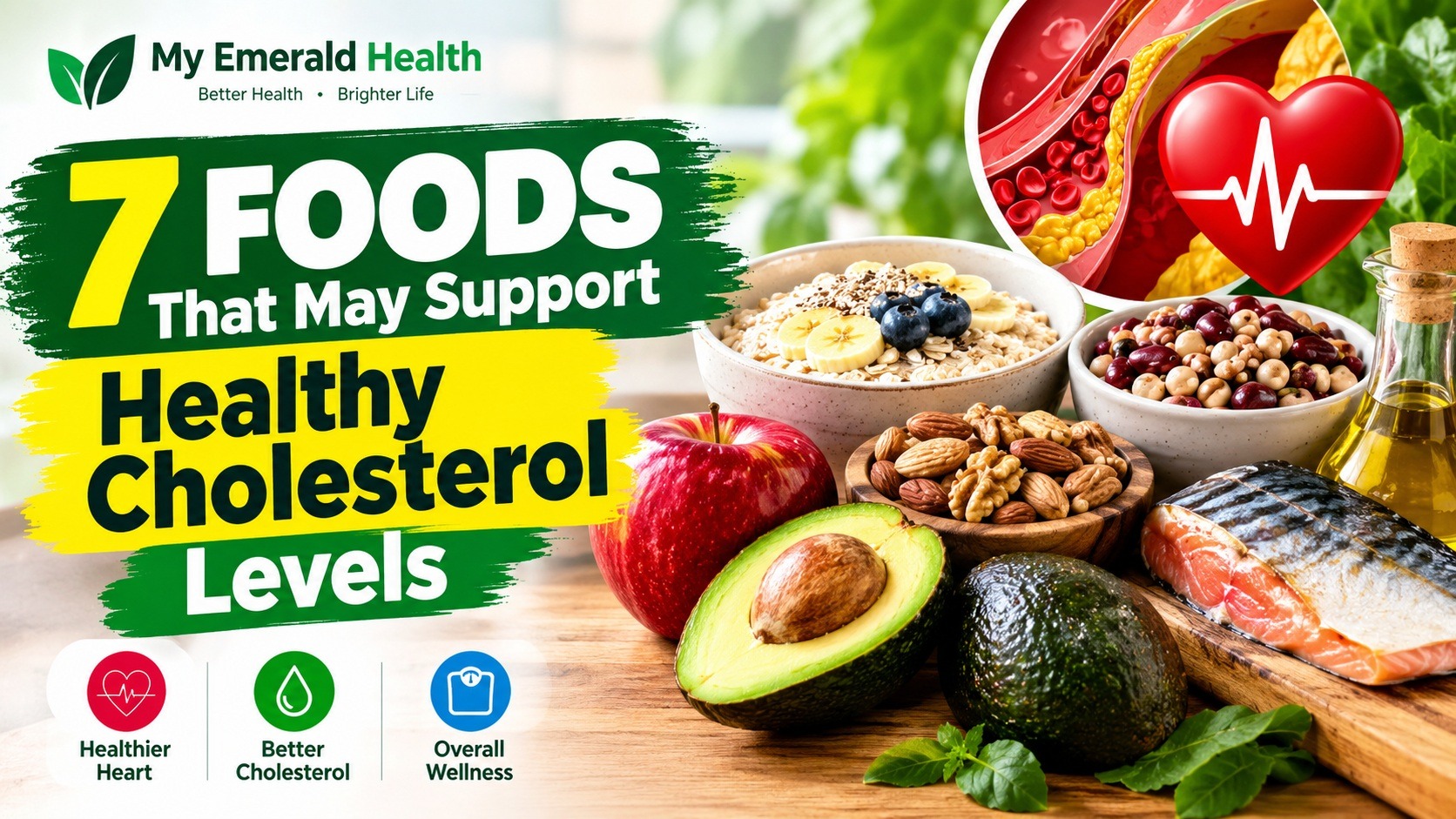
Here are 7 foods that support healthy cholesterol levels, how they work, and practical ways to add them to your daily meals.
Oats: The Heart-Smart Breakfast Staple
Imagine starting your morning with a meal that does more than satisfy your hunger—it actively works to clean up your bloodstream.
Oats contain a special type of soluble fiber called beta-glucan. When beta-glucan mixes with water in your digestive system, it forms a viscous, gel-like substance. This gel binds to cholesterol-rich bile acids, helping your body excrete them rather than reabsorbing them into your blood.
[ Beta-Glucan Fiber + Water ]
│
▼
[ Gel-Like Trap in Gut ]
│
▼
[ Binds Cholesterol & Excretes It ]
│
▼
[ Lowers Circulating LDL ]
How to Eat More Oats:
Heart-Healthy Bowl: Top plain oatmeal with sliced bananas, apples, or a small handful of unsalted nuts.
Smoothies & Baking: Blend rolled oats into morning smoothies or use them as a flour substitute in baking.
Pro Tip: Avoid flavored instant oatmeal packets, which are often loaded with added sugars. Stick to plain rolled or steel-cut oats.
Whether you prefer black beans, kidney beans, lentils, chickpeas, or black-eyed beans, legumes are among the most budget-friendly and effective heart-healthy foods available.
Beans work in two distinct ways:
Fiber Action: Their high soluble fiber content reduces cholesterol absorption in your digestive tract.
Saturated Fat Reduction: Replacing fatty or processed meats with beans naturally lowers your overall intake of saturated fat—one of the main dietary drivers of high LDL cholesterol.
Bean Type
Key Nutrients
Practical Meal Idea
Chickpeas
Soluble Fiber, Folate
Toss into fresh garden salads or blend into hummus.
Lentils
Plant Protein, Iron
Combine with brown rice or simmer in vegetable soups.
Black-eyed Beans
Soluble Fiber, Potassium
Traditional dishes like moi moi, bean porridge, or akara.
Cooking Tip: Preparation matters! Deep-frying bean products in large amounts of oil adds unnecessary calories and unhealthy fats. Opt for boiling, steaming, or baking with minimal oil.
Nuts: Small Portions with Massive Cardiovascular Benefits
Almonds, walnuts,pecans, and cashews pack a heavy nutritional punch into a small package. Nuts are rich in unsaturated fats, plant sterols, and fiber, which help block cholesterol absorption. Walnuts are particularly special because they contain alpha-linolenic acid (ALA), a plant-based omega-3 fatty acid.
Making the Swap
Adding nuts to an already high-calorie diet won’t deliver results—the key is replacement. Replace processed, high-sodium snacks (like potato chips or biscuits) with a small handful of unsalted nuts.
Quick Serving Ideas: Sprinkle chopped walnuts over oatmeal, mix almond slices into plain yogurt, or keep a small pack in your bag for an afternoon snack.
Apples: The Soluble Fiber Hiding in Plain Sight
An apple a day won’t cure high cholesterol overnight, but it offers a powerful digestive ally: pectin.
Pectin is a type of soluble fiber that binds to cholesterol in the digestive tract. Apples are also rich in polyphenols, natural plant compounds that help reduce inflammation and protect blood vessels.
Whole Fruit vs. Fruit Juice
Always choose whole apples over apple juice. Processing fruit into juice removes the essential fiber needed to manage cholesterol, leaving behind concentrated sugar.
Alternative Choices: If apples are unavailable or pricey, other fruits rich in soluble fiber include pears, oranges, and guavas. Aim for variety!
Fatty Fish: Targeting Triglycerides & Supporting Heart Health
Fatty fish like salmon, sardines, mackerel, and trout are famous for their high concentration of omega-3 fatty acids.
It’s important to understand how omega-3s work:
They do lower elevated triglycerides (a type of fat in your blood linked to heart disease).
They do not necessarily lower LDL cholesterol directly.
Despite this, eating fatty fish twice a week is a cornerstone of cardiovascular health because it supports healthy blood pressure and replaces processed, high-saturated-fat meats.
Budget-Friendly Tip: Canned sardines and fresh or frozen mackerel are accessible, highly nutritious options. Just check canned labels to avoid excess sodium.
Avocados: A Creamy Source of Monounsaturated Fats
Avocados are rich in monounsaturated fatty acids (MUFAs) and dietary fiber. Replacing saturated fats (like butter or lard) with monounsaturated fats helps lower LDL cholesterol while preserving “good” HDL cholesterol.
Smart Ways to Eat Avocado:
Slice fresh avocado onto whole-grain toast instead of spreading butter.
Toss diced avocado into bean salads or serve a modest portion alongside grilled vegetables.
Portion Control: Because avocados are energy-dense, a serving size of 1/3 to 1/2 of a medium avocado is usually ideal.
Extra-Virgin Olive Oil: The Ultimate Culinary Swap
Rounding out our list is extra-virgin olive oil (EVOO)—a staple of the Mediterranean diet. EVOO is loaded with monounsaturated fats and antioxidant polyphenols that help prevent LDL cholesterol from oxidizing (a key step in plaque formation inside arteries).
How to Use EVOO Correctly:
Use it as a base for homemade salad dressings.
Drizzle a small amount over roasted vegetables or grain bowls just before serving.
Alternative Options: If olive oil is out of reach, other unsaturated oils like canola oil or sunflower oil offer similar fat-swap benefits.
How to Combine These Foods into a Sample Daily Menu
You don’t need to eat all seven foods every day. Sustainable heart health is about building a balanced, long-term eating pattern. Here is a simple blueprint for an ordinary day:
Breakfast: A bowl of warm oatmeal cooked with water or plant milk, topped with thin apple slices and a pinch of cinnamon.
Lunch: A bowl of boiled black-eyed beans or lentils served with steamed vegetables and brown rice.
Snack: A small handful of unsalted almonds or walnuts.
Dinner: Pan-seared mackerel served with grilled vegetables and a light drizzle of extra-virgin olive oil.
Final Thoughts: Focus on the Bigger Picture
Individual foods are powerful tools, but they work best as part of an overall heart-healthy lifestyle. To maximize your results:
Limit saturated and trans fats from fried foods and fatty cuts of meat.
Stay physically active for at least 150 minutes per week.
Get regular health checkups, including a routine lipid profile.
Join the Conversation!
Which of these seven foods do you already eat regularly, and which one would you like to add to your grocery list this week? Let us know in the comments below!
If you found this article helpful, share it with a family member or friend who wants to take proactive steps toward better heart health.
Medical Disclaimer:This article is for educational purposes only and is not a substitute for professional medical advice, diagnosis, or treatment. Always consult your doctor or a registered dietitian before making significant changes to your health routine or if you have concerns about your cholesterol levels.
A graduate of Computer Science and Information Management Technology. Diploma – Caregiving, Certificates – Dementia and Diabetes Awareness and Management. A researcher, blogger, songwriter, singer and acoustic guitarist. Born in an environment where natural talents such as healing are imparted at our natural birth. This natural talents of healing is the result of our genetic inheritance and the training from family environment.
We use cookies on our website to give you the most relevant experience by remembering your preferences and repeat visits. By clicking “Accept All”, you consent to the use of ALL the cookies. However, you may visit "Cookie Settings" to provide a controlled consent.
This website uses cookies to improve your experience while you navigate through the website. Out of these, the cookies that are categorized as necessary are stored on your browser as they are essential for the working of basic functionalities of the website. We also use third-party cookies that help us analyze and understand how you use this website. These cookies will be stored in your browser only with your consent. You also have the option to opt-out of these cookies. But opting out of some of these cookies may affect your browsing experience.
Necessary cookies are absolutely essential for the website to function properly. These cookies ensure basic functionalities and security features of the website, anonymously.
Cookie
Duration
Description
cookielawinfo-checkbox-analytics
11 months
This cookie is set by GDPR Cookie Consent plugin. The cookie is used to store the user consent for the cookies in the category "Analytics".
cookielawinfo-checkbox-functional
11 months
The cookie is set by GDPR cookie consent to record the user consent for the cookies in the category "Functional".
cookielawinfo-checkbox-necessary
11 months
This cookie is set by GDPR Cookie Consent plugin. The cookies is used to store the user consent for the cookies in the category "Necessary".
cookielawinfo-checkbox-others
11 months
This cookie is set by GDPR Cookie Consent plugin. The cookie is used to store the user consent for the cookies in the category "Other.
cookielawinfo-checkbox-performance
11 months
This cookie is set by GDPR Cookie Consent plugin. The cookie is used to store the user consent for the cookies in the category "Performance".
viewed_cookie_policy
11 months
The cookie is set by the GDPR Cookie Consent plugin and is used to store whether or not user has consented to the use of cookies. It does not store any personal data.
Functional cookies help to perform certain functionalities like sharing the content of the website on social media platforms, collect feedbacks, and other third-party features.
Performance cookies are used to understand and analyze the key performance indexes of the website which helps in delivering a better user experience for the visitors.
Analytical cookies are used to understand how visitors interact with the website. These cookies help provide information on metrics the number of visitors, bounce rate, traffic source, etc.
Advertisement cookies are used to provide visitors with relevant ads and marketing campaigns. These cookies track visitors across websites and collect information to provide customized ads.