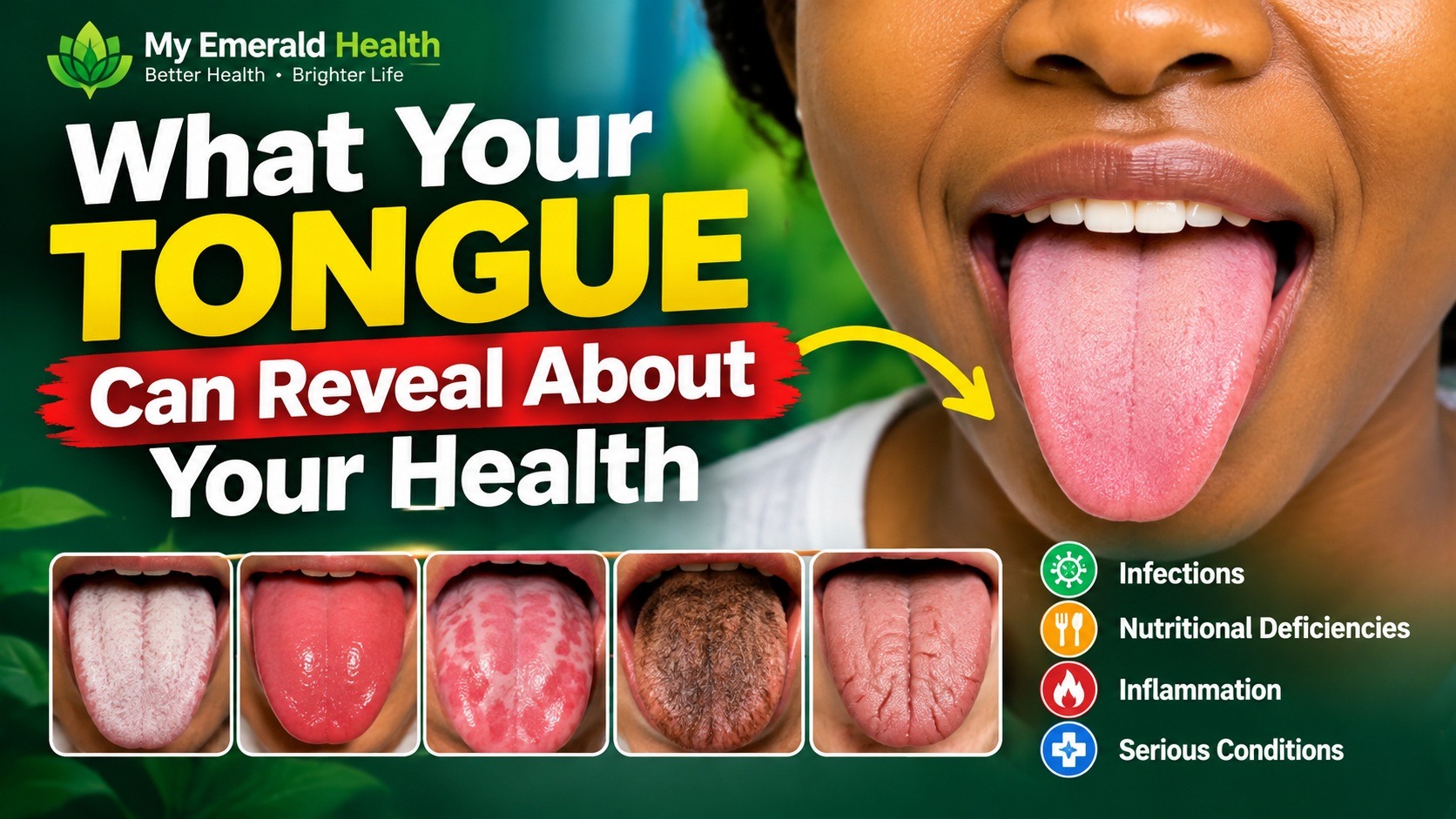
Discover what your tongue can reveal about your health, from white and red tongue changes to vitamin deficiencies, oral thrush, and warning signs of oral cancer. Learn when to seek medical advice. What is your tongue telling you? Learn what white coatings, red patches, swelling, and dry mouth reveal about your health and when to seek medical advice.
Have you ever looked at your tongue in the mirror and wondered why it suddenly looks white, unusually red, swollen, or covered with strange patches? Perhaps you’ve noticed a burning sensation, a persistent sore, or a change in the way your tongue feels when you eat your favorite foods.
Here’s something fascinating: your tongue does more than help you speak, taste, chew, and swallow. Changes in its appearance can sometimes provide clues about your oral health, nutritional status, infections, and other medical conditions.
However, there’s an important distinction you need to understand: your tongue can offer clues about your health, but it cannot diagnose a disease on its own.
Some changes are harmless and temporary. Others deserve attention because they may be signs of an underlying problem that needs treatment. In today’s discussion from My Emerald Health, we are exploring what the color, texture, coating, and condition of your tongue may reveal about your health, the warning signs you should never ignore, and when it’s time to speak with a healthcare professional.
Let’s dive into the details.
What Does a White Tongue Mean?
Let’s begin with one of the most common changes people notice: a white coating on the tongue. If you look at your tongue and see a thin, whitish layer, there’s no immediate reason to panic.
The surface of your tongue contains tiny structures called papillae, which help create its familiar textured appearance. Food particles, bacteria, dead cells, and other debris can collect between them, producing a white coating. Dehydration, dry mouth, smoking, and inadequate oral hygiene can all contribute to this appearance. In some cases, gently cleaning your tongue and maintaining good oral hygiene may help resolve it.
However, not every white tongue has the same explanation. According to the UK’s National Health Service (NHS), a white tongue may be associated with several conditions, including oral thrush, anaemia, lichen planus, leukoplakia, and geographic tongue.
Oral Thrush: A fungal infection caused by an overgrowth of a yeast called Candida. It can produce creamy white patches on the tongue and inside the mouth. According to the Mayo Clinic, oral thrush is more likely in people with weakened immune systems, diabetes, or certain medication exposures, including antibiotics and corticosteroids. Some people may experience soreness, redness, or discomfort when eating.
Leukoplakia: Unlike temporary coatings, some white patches do not rub away easily and require medical assessment rather than repeated attempts to scrape them off. Leukoplakia can produce persistent white patches in the mouth. Although many such patches do not become cancerous, some can represent potentially precancerous changes.
Practical Takeaway: A temporary coating may be relatively harmless, but a persistent white patch, particularly one that cannot be wiped away, should not be ignored.
(Sources: NHS, “Sore or white tongue”; Mayo Clinic, “Oral thrush.”)
A Bright Red or Smooth Tongue
Now, what if your tongue looks unusually red, shiny, or smooth? A healthy tongue is generally pink, although its normal appearance varies from person to person.
When the tongue becomes unusually smooth or inflamed, one possible explanation is glossitis, a term used to describe inflammation of the tongue. Why does this happen?
Nutritional Deficiencies: One potential cause is a deficiency in key nutrients. Iron, vitamin B12, and folate are important for normal blood cell production and healthy tissues. Deficiencies in these nutrients can sometimes contribute to a sore, red, or smooth tongue. For example, vitamin B12 deficiency can affect the nervous system as well as the blood and oral tissues, causing a sore tongue alongside fatigue, weakness, tingling, or numbness. Iron deficiency can also cause changes in the mouth, particularly when it contributes to anaemia.
Other Factors: However, these symptoms are not specific to nutritional deficiencies. Inflammation, infections, certain medications, and other conditions can produce similar changes.
This is why guessing which vitamin you need based only on the appearance of your tongue can be misleading. If your tongue remains unusually red or smooth—especially if you also experience persistent tiredness, weakness, or other unexplained symptoms—speak with a healthcare professional to determine whether blood tests or other investigations are appropriate.
Remember, taking high doses of supplements without establishing whether you have a deficiency is not always helpful and can sometimes be harmful. Your goal should be to identify the root cause, not simply to change the color of your tongue.
(Research references: Mayo Clinic, “Basic Remedies Relieve Hairy Tongue and Other Common Tongue Changes”; review article, “Diseases of the tongue,” published in Clinics in Dermatology in 2016.)
A Red Tongue with Map-Like Patches
Have you ever seen a tongue with irregular red patches surrounded by pale or whitish borders, making it look as though someone has drawn a map on the surface?
This appearance is associated with a condition known as geographic tongue, or benign migratory glossitis. According to the Mayo Clinic, geographic tongue occurs when small structures on the tongue’s surface (papillae) disappear in certain areas, producing smooth, red patches that can change location, size, and shape over time.
While the appearance may be alarming if you have never seen it before, here is the reassuring part: geographic tongue is generally harmless and is not considered an infection or cancer. Some people have no symptoms at all, while others experience sensitivity or a burning sensation when eating spicy, salty, or acidic foods. The exact cause is not fully understood, and researchers continue to investigate possible associations with other conditions.
If you notice these map-like patches, don’t automatically assume that something serious is happening inside your body. At the same time, don’t assume that every unusual red patch is geographic tongue. A persistent or painful lesion should be assessed, especially if its appearance is unfamiliar or it doesn’t behave like a changing map. A healthcare professional can help distinguish this generally harmless condition from other causes of tongue inflammation.
(Research reference: Mayo Clinic, “Geographic tongue: Symptoms and causes.”)
A Black or Hairy-Looking Tongue
Let’s talk about a tongue appearance that can be particularly frightening: a dark brown or black tongue that seems to have tiny hairs growing from it. The condition is commonly called black hairy tongue.
Despite its dramatic name, the tongue isn’t actually growing hair. Instead, the papillae on its surface can become elongated and trap pigments, food debris, and microorganisms, making the tongue look hairy and discoloured.
Factors associated with this condition include:
Smoking or tobacco use
Inadequate oral hygiene
Dry mouth
Certain medications (such as particular antibiotics following changes in the oral environment)
Although the appearance can be unpleasant, black hairy tongue is often temporary and benign. Improving oral hygiene, gently brushing the tongue, drinking enough water, and addressing contributing factors may help. If the condition develops after starting a medication, ask your healthcare professional whether that medication could be contributing—never stop a prescribed medicine on your own.
It is also important to understand that a dark tongue doesn’t automatically mean you have a dangerous disease, as food, drinks, medications, and other factors can alter tongue colour. But if the discolouration persists, causes discomfort, or is accompanied by other unexplained symptoms, arrange an assessment. Your tongue’s appearance is useful information, but the full clinical picture matters much more than colour alone.
A Swollen or Enlarged Tongue
What if your tongue seems larger than usual, presses against your teeth, or leaves impressions along its edges? Several explanations are possible.
Sometimes, the tongue’s edges appear scalloped because it presses against the teeth. This can occur for different reasons, including the way the tongue rests in the mouth or limited space within the jaw. A swollen tongue can also result from inflammation, injury, infection, or other medical conditions.
However, there is one critical situation where you must act immediately:
🚨 EMERGENCY WARNING: If your tongue suddenly swells—particularly alongside swelling of your lips or throat, difficulty breathing, or difficulty swallowing—seek emergency medical care immediately.
These symptoms can indicate a serious allergic reaction called anaphylaxis, or another potentially dangerous condition affecting the airway. Do not wait to see whether the swelling disappears on its own.
If the change is gradual rather than sudden, a healthcare professional can assess possible causes, taking into account your symptoms, medical history, and any medications you use. The key lesson here is that the speed of a change matters. A longstanding, painless variation is completely different from sudden swelling that interferes with breathing or swallowing.
Cracks, Grooves, or Fissures on the Tongue
Have you noticed deep grooves or cracks running across the surface of your tongue? This may be a condition called fissured tongue.
Although it can look unusual, fissured tongue is often a harmless variation in the tongue’s surface. Some people have a single prominent groove, while others have several smaller grooves across the top.
The important consideration here is oral hygiene. Food particles and debris can collect inside deeper grooves, potentially contributing to irritation or bad breath. Gently cleaning the tongue and maintaining regular oral hygiene may help keep the grooves free of debris.
However, cracks accompanied by pain, swelling, bleeding, or other new changes deserve attention. Also, remember that fissures alone are not a reliable way to identify a vitamin deficiency, digestive problem, or other systemic disease. The appearance of your tongue must be interpreted alongside your symptoms and, when necessary, a proper clinical examination.
Persistent Sores, Red Patches, or White Patches
This is perhaps the most important section of today’s discussion.
Most people occasionally develop a minor mouth ulcer or irritate their tongue by biting it or eating food that is too hot, and many such problems heal without complications. However, a sore, lump, or red or white patch that persists for two weeks or longer should be assessed by a dentist or other qualified healthcare professional.
Why is this important? Because persistent changes can sometimes be signs of oral cancer or other conditions that require treatment. The American Dental Association (ADA) identifies warning signs that can include:
Unexplained oral pain
Abnormal bleeding
Persistent patches or growths
Numbness
Difficulty swallowing
Changes in speech
Tongue cancer may present as a sore that does not heal, a lump or thickened area, or persistent pain. Some people also experience bleeding or difficulty moving their tongue.
These symptoms do not automatically mean cancer is present—many have other explanations—but waiting indefinitely to see whether a persistent lesion disappears is not a sensible approach. The ADA’s oral cancer guidance emphasizes the importance of a comprehensive clinical examination. When a suspicious lesion is found, a clinician may recommend referral or a biopsy to establish the diagnosis.
Tobacco use and alcohol consumption are established risk factors for cancers of the oral cavity, and using tobacco and consuming alcohol heavily together increases the risk further. Regular dental check-ups, avoiding tobacco, limiting alcohol, and seeking prompt assessment of persistent abnormalities are sensible steps toward protecting your oral health.
Please don’t use online photographs or self-examination alone to rule out oral cancer. The safest decision is to have a persistent abnormality examined professionally.
(Sources: American Dental Association, “Cancer (Head and Neck)” and “Oral Cancer Guideline”; Mayo Clinic, “Tongue cancer: Symptoms and causes.”)
What About a Dry Tongue or a Change in Taste?
Finally, pay attention to how your tongue feels, not just how it looks.
If your mouth frequently feels dry, your tongue feels sticky, or you struggle to swallow dry foods, you may be experiencing dry mouth, also known as xerostomia. Dry mouth can occur when saliva production is reduced, with possible contributors including dehydration, certain medications, and some medical conditions.
Saliva is vital because it helps lubricate the mouth, supports swallowing, and protects the teeth and oral tissues. When saliva is insufficient, people may experience difficulty speaking or eating, altered taste, mouth discomfort, and an increased risk of tooth decay. A persistent change in taste can also have several explanations, including medication effects, oral infections, and other health conditions.
So, if your tongue feels persistently dry or your sense of taste changes without an obvious explanation, discuss it with a healthcare professional or dentist. Drinking adequate fluids may help when dehydration is responsible, but persistent dry mouth shouldn’t automatically be blamed on not drinking enough water. If you take medication regularly, ask your clinician or pharmacist whether dry mouth could be a side effect. Never discontinue prescribed medication without professional advice.
How to Check Your Tongue and Protect Your Oral Health
Now that we’ve explored these different changes, how can you use this information in your everyday life?
Make checking your tongue part of your normal oral hygiene routine. In good lighting, look at its colour, surface, and edges. Notice any new patches, sores, swelling, or changes that don’t seem to be improving.
Brush your teeth regularly with fluoride toothpaste and gently clean your tongue. Avoid aggressive scraping, which can irritate delicate oral tissues.
Drink enough fluids and pay attention to persistent dry mouth. If you smoke, seek support to stop. Avoid excessive alcohol consumption, and maintain a balanced diet that provides the nutrients your body needs.
Don’t diagnose yourself based on a single symptom. A white tongue doesn’t automatically mean infection, a red tongue doesn’t automatically mean vitamin deficiency, and a dark tongue doesn’t automatically mean something dangerous. The pattern, duration, accompanying symptoms, and clinical examination are what help determine whether a change is significant.
Don’t ignore persistent abnormalities. If a sore, lump, or unexplained red or white patch lasts two weeks or longer, arrange a professional assessment. Seek emergency care for sudden tongue swelling that affects breathing or swallowing.
Your tongue is one small part of your body, but paying attention to changes in your mouth can help you recognize when something needs further investigation.
Conclusion
So, what can your tongue reveal about your health? It may offer clues about oral hygiene, fungal infections, nutritional deficiencies, inflammation, medication side effects, and potentially serious conditions that require medical attention.
But the most important lesson is this: your tongue is a source of clues, not a substitute for medical diagnosis.
Don’t panic every time you notice a change, but don’t ignore a persistent problem either. Learn what’s normal for your body, maintain good oral hygiene, and seek professional advice when something doesn’t look or feel right.
📋 Medical Disclaimer
This article is intended for general educational and informational purposes only. It does not provide individual medical advice, diagnose any condition, or replace consultation with a qualified healthcare professional. Tongue changes can have multiple causes, and only an appropriate clinical assessment can determine the underlying cause. Seek urgent medical care for symptoms affecting breathing or swallowing.
A graduate of Computer Science and Information Management Technology. Diploma – Caregiving, Certificates – Dementia and Diabetes Awareness and Management. A researcher, blogger, songwriter, singer and acoustic guitarist. Born in an environment where natural talents such as healing are imparted at our natural birth. This natural talents of healing is the result of our genetic inheritance and the training from family environment.
We use cookies on our website to give you the most relevant experience by remembering your preferences and repeat visits. By clicking “Accept All”, you consent to the use of ALL the cookies. However, you may visit "Cookie Settings" to provide a controlled consent.
This website uses cookies to improve your experience while you navigate through the website. Out of these, the cookies that are categorized as necessary are stored on your browser as they are essential for the working of basic functionalities of the website. We also use third-party cookies that help us analyze and understand how you use this website. These cookies will be stored in your browser only with your consent. You also have the option to opt-out of these cookies. But opting out of some of these cookies may affect your browsing experience.
Necessary cookies are absolutely essential for the website to function properly. These cookies ensure basic functionalities and security features of the website, anonymously.
Cookie
Duration
Description
cookielawinfo-checkbox-analytics
11 months
This cookie is set by GDPR Cookie Consent plugin. The cookie is used to store the user consent for the cookies in the category "Analytics".
cookielawinfo-checkbox-functional
11 months
The cookie is set by GDPR cookie consent to record the user consent for the cookies in the category "Functional".
cookielawinfo-checkbox-necessary
11 months
This cookie is set by GDPR Cookie Consent plugin. The cookies is used to store the user consent for the cookies in the category "Necessary".
cookielawinfo-checkbox-others
11 months
This cookie is set by GDPR Cookie Consent plugin. The cookie is used to store the user consent for the cookies in the category "Other.
cookielawinfo-checkbox-performance
11 months
This cookie is set by GDPR Cookie Consent plugin. The cookie is used to store the user consent for the cookies in the category "Performance".
viewed_cookie_policy
11 months
The cookie is set by the GDPR Cookie Consent plugin and is used to store whether or not user has consented to the use of cookies. It does not store any personal data.
Functional cookies help to perform certain functionalities like sharing the content of the website on social media platforms, collect feedbacks, and other third-party features.
Performance cookies are used to understand and analyze the key performance indexes of the website which helps in delivering a better user experience for the visitors.
Analytical cookies are used to understand how visitors interact with the website. These cookies help provide information on metrics the number of visitors, bounce rate, traffic source, etc.
Advertisement cookies are used to provide visitors with relevant ads and marketing campaigns. These cookies track visitors across websites and collect information to provide customized ads.