10 Best Anti-Inflammatory Foods That Help Reduce Arthritis Pain Naturally
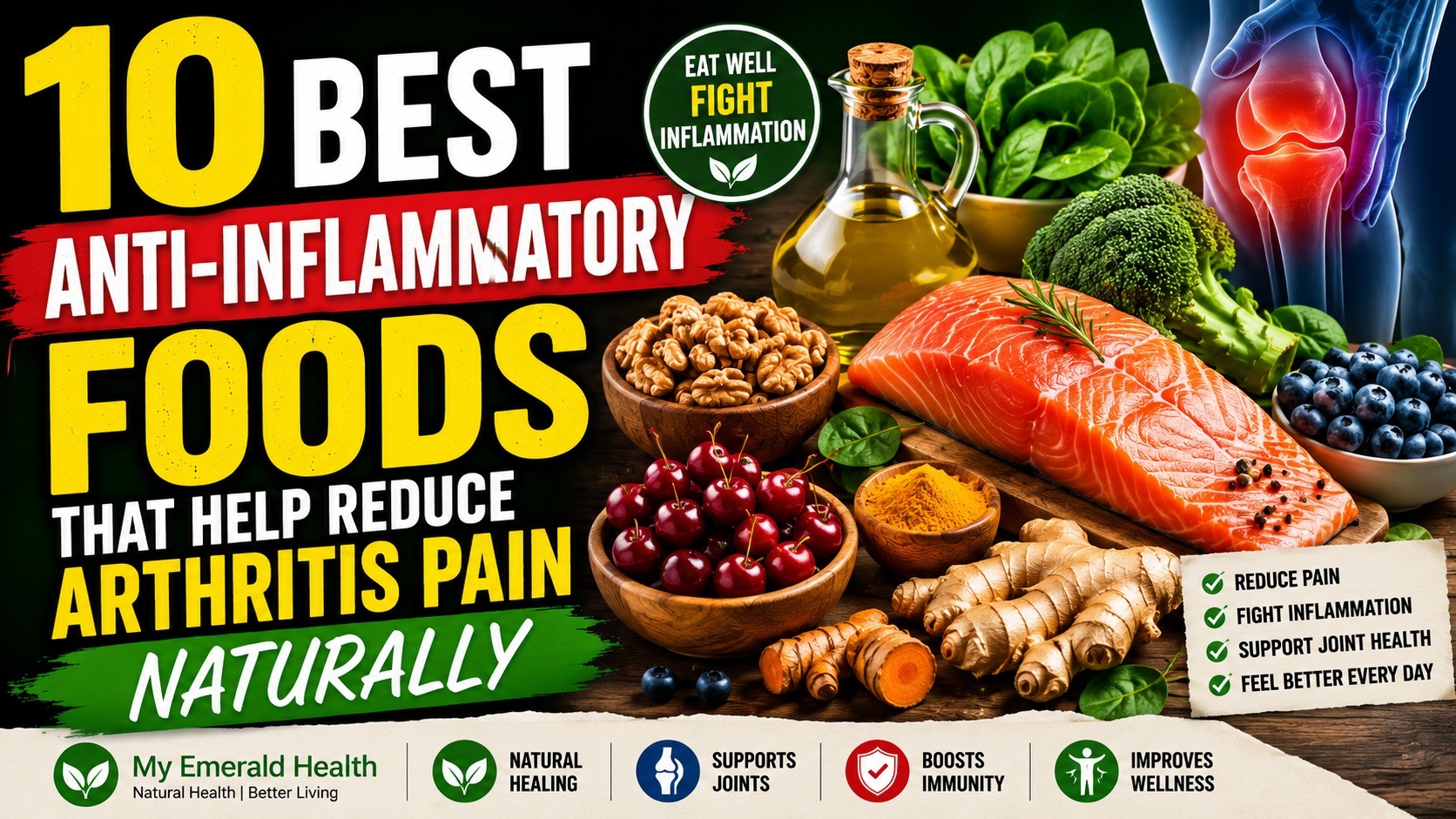
10 Best Anti-Inflammatory Foods That Help Reduce Arthritis Pain Naturally
Discover the 10 best anti-inflammatory foods that may help reduce arthritispain naturally. Learn how salmon, turmeric, berries, olive oil, ginger, and other science-backed foods can support joint health, reduce inflammation, and improve mobility as part of a healthy lifestyle.
Have you ever wondered why some people with arthritis seem to have less pain and better mobility, even though they have the same condition?
The answer isn’t just medication.
Research increasingly shows that the foods you eat every day can influence inflammation throughout your body. While no food can cure arthritisor replace medical treatment, certain foods may help reduce inflammation, support healthy joints, and even improve your quality of life when combined with a healthy lifestyle.
If you’ve been waking up with stiff knees, aching fingers, sore hips, or painful joints, this video is for you.
Today, we’ll count down 10 of the best anti-inflammatory foods that nutrition experts and researchers recommend for people living with arthritis.
And make sure you stay until the end because the number one food has some of the strongest scientific evidence for supporting joint health.
Before we begin, if you’re interested in any of the foods or supplements mentioned in today’s video, we’ve included links to trusted recommended products in the description below. Some of these are affiliate links, which means we may earn a small commission at no additional cost to you if you make a purchase. Your support helps us continue creating free, research-based health content here on My Emerald Health.
If you’re new here, welcome to My Emerald Health, where we share evidence-based natural health tips, nutrition advice, and wellness information to help you live a healthier life.
Now, let’s get started.
10 Best Anti-Inflammatory Foods That Help Reduce Arthritis Pain Naturally
Number 10 — Leafy Green Vegetables
Spinach, kale, collard greens, Swiss chard, and other dark leafy vegetables are nutritional powerhouses.
These vegetables are packed with vitamins A, C, K, folate, magnesium, and antioxidants that help protect your body’s cells from oxidative stress.
According to registered dietitians from the Academy of Nutrition and Dietetics, leafy greens are among the best vegetables for reducing inflammation because they’re rich in plant compounds called polyphenols and carotenoids.
Vitamin K also plays an important role in maintaining healthy bones, which is especially important for people living with arthritis.
Several observational studies have found that diets rich in leafy vegetables are associated with lower levels of inflammatory markers in the blood.
Small changes like these can make a meaningful difference over time.
Number 9 — Walnuts
Walnuts are one of the few nuts naturally rich in plant-based omega-3 fatty acids, specifically alpha-linolenic acid, or ALA.
Omega-3 fats have been widely studied for their ability to help regulate inflammatory processes in the body.
Walnuts also provide antioxidants, vitamin E, magnesium, and polyphenols that may help combat oxidative stress linked to arthritis.
Nutrition researchers often recommend replacing processed snacks with a handful of unsalted walnuts because this simple switch increases healthy fats while reducing less nutritious options.
One serving is about a small handful—or roughly 28 grams.
Just remember that walnuts are calorie-dense, so moderation is key.
Number 8 — Berries
Blueberries, strawberries, raspberries, and blackberries aren’t just delicious—they’re packed with anthocyanins.
Anthocyanins are powerful antioxidants that give berries their vibrant red, blue, and purple colors.
Researchers have found that these compounds may help reduce inflammatory chemicals produced by the body.
Berries are also high in vitamin C, which your body uses to produce collagen, an important protein that supports cartilage, ligaments, and connective tissue.
Some studies have even suggested that people who regularly consume berries tend to have lower levels of certain inflammatory markers.
Aim to include legumes in your meals several times each week.
They’re affordable, filling, and incredibly nutritious.
BEFORE WE CONTINUE…
If you’re finding today’s video helpful, let us know by giving it a thumbs up.
It really helps YouTube recommend our videos to more people looking for reliable health information.
And don’t forget to subscribe to My Emerald Health and turn on notifications so you never miss our latest videos on healthy eating, natural wellness, and disease prevention.
In the next section, we’ll reveal the foods that many rheumatologists and dietitians consider even more beneficial—including one everyday cooking ingredient that has been extensively studied for its anti-inflammatory properties.
These next foods are commonly recommended by registered dietitians, rheumatologists, and major health organizations because they’re rich in natural compounds that may help reduce inflammation and support long-term joint health.
Let’s continue.
Number 6 — Broccoli
Broccoli is one of the most nutrient-dense vegetables you can eat, especially if you have arthritis.
It’s loaded with vitamin C, vitamin K, calcium, fiber, and a natural plant compound called sulforaphane.
Sulforaphane has attracted significant attention from researchers because laboratory and animal studies suggest it may help reduce inflammatory activity and protect cartilage from damage. While more human research is still needed, the findings so far are promising.
Broccoli is also rich in antioxidants that help protect your cells from oxidative stress, which is believed to contribute to joint inflammation and aging.
Registered dietitians often recommend eating broccoli several times a week as part of a varied, plant-rich diet.
To get the most nutrients:
Steam it lightly instead of overcooking it.
Add it to stir-fries.
Roast it with olive oil and garlic.
Toss it into soups or salads.
Remember, variety matters. Broccoli works best as part of an overall healthy eating pattern rather than as a miracle food.
Number 5 — Ginger
Gingerhas been used for centuries in traditional medicine, but modern science is also helping explain why it’s so widely respected.
Its main active compounds, called gingerols and shogaols, have anti-inflammatory and antioxidant properties.
Several clinical studies have found that ginger supplementation may help reduce painin some people with osteoarthritis, particularly in the knees. Although the improvements are generally modest, many people find ginger to be a helpful addition to an overall arthritis management plan.
Some researchers believe ginger may work by influencing inflammatory pathways in the body that are also targeted by certain pain-relieving medications—though ginger is not a replacement for prescribed treatment.
You can enjoy ginger in several ways:
Fresh ginger tea
Added to smoothies
Stir-fried vegetables
Homemade soups
Grated into marinades
If you’re considering concentrated ginger supplements, especially if you take blood-thinning medication, speak with your healthcare provider first, as ginger may interact with certain medicines.
Number 4 — Extra Virgin Olive Oil
If there’s one ingredient that consistently appears in healthy eating research, it’s extra virgin olive oil.
This heart-healthy oil is a cornerstone of the Mediterranean diet, one of the most studied dietary patterns for reducing chronic inflammation.
Extra virgin olive oil contains healthy monounsaturated fats along with a powerful natural compound called oleocanthal.
Scientists have found that oleocanthal has anti-inflammatory properties that work in ways similar to certain nonsteroidal anti-inflammatory drugs, although the effect from food is much milder and should not be considered a substitute for medication.
Nutrition experts recommend replacing butter, margarine, or highly processed cooking oils with extra virgin olive oil whenever possible.
Easy ways to use it include:
Drizzle it over salads.
Roast vegetables with it.
Use it as a dip for whole-grain bread.
Add it to cooked vegetables after steaming.
Choosing high-quality extra virgin olive oil can help preserve more of its beneficial plant compounds.
Number 3 — Fatty Fish
Now we’re entering the top three.
Fatty fish is widely considered one of the best foods for fighting inflammation naturally.
Fish such as:
Salmon
Sardines
Mackerel
Herring
Trout
are excellent sources of the omega-3 fattyacids EPA and DHA.
Unlike the plant-based omega-3 found in walnuts, EPA and DHA are the forms most strongly associated with anti-inflammatory benefits in scientific research.
According to the Arthritis Foundation and the American College of Rheumatology, omega-3 fatty acids may help reduce joint tenderness and morning stiffness in some people, particularly those with rheumatoid arthritis.
A review of multiple studies has shown that regular omega-3 intake can help lower inflammatory markers and may improve certain arthritis symptoms when combined with standard medical care.
The general recommendation is to eat fatty fish at least two times each week.
If you don’t eat fish regularly, talk with your healthcare provider about whether a high-quality fish oil supplement is appropriate for you.
When buying fish, choose options that are baked, grilled, or steamed instead of deep-fried, since frying may reduce some of the overall health benefits.
STAY WITH US…
We’re down to the final two foods, and these are among the most researched natural anti-inflammatory foods available.
One is a brightly colored spice found in many kitchens around the world.
The other is a fruit that’s been making headlines in nutrition research because of its impressive antioxidant content.
If you’re serious about supporting your joints through healthy eating, you won’t want to miss what’s coming next.
Remember, no single food can cure arthritis. The greatest benefits come from consistently following an overall healthy eating pattern, staying physically active, maintaining a healthy weight, and following your healthcare provider’s treatment plan.
Now, let’s reveal the top two foods.
Number 2 — Turmeric
Turmeric has become one of the world’s most studied spices, and for good reason.
Its bright yellow color comes from a natural compound called curcumin, which has been extensively researched for its anti-inflammatory and antioxidant properties.
Scientists believe curcumin may help reduce inflammation by influencing multiple signaling pathways involved in the body’s inflammatory response.
Several clinical trials have reported that some people with osteoarthritis experienced improvements in pain and physical function after taking standardized curcumin extracts. However, results vary between studies, and researchers continue to investigate the most effective doses and formulations.
One important point is that curcumin is not absorbed very efficiently on its own.
Nutrition experts often recommend consuming turmeric with a small amount of black pepper because black pepper contains piperine, a compound that can significantly improve curcumin absorption.
Since turmeric is fat-soluble, eating it alongside healthy fats such as extra virgin olive oil or avocado may also support absorption.
Simple ways to include turmeric in your diet include:
Stirring it into soups
Adding it to curries
Mixing it into scrambled eggs
Blending it into smoothies
Preparing golden milk with low-fat or plant-based milk
If you’re thinking about taking high-dose turmeric or curcumin supplements, especially if you take blood thinners, have gallbladder disease, or are preparing for surgery, consult your healthcare provider first because supplements may not be appropriate for everyone.
Number 1 — Tart Cherries
Taking the number one spot are tart cherries.
Although all cherries provide beneficial nutrients, tart cherries have attracted particular interest because they’re rich in anthocyanins and other polyphenols—natural compounds with antioxidant and anti-inflammatory properties.
Studies suggest that tart cherry products may help reduce markers of inflammation and oxidative stress in some people. Some small clinical studies have also reported improvements in pain and physical function among individuals with osteoarthritis,although larger studies are still needed to confirm these findings.
Tart cherries are also known for providing melatonin, which may help support healthy sleep. Better sleep can be especially valuable for people with arthritis, as poor sleep is often linked with increased pain sensitivity and fatigue.
You can enjoy tart cherries in several forms:
Fresh when available
Frozen
Unsweetened dried tart cherries
Unsweetened tart cherry juice in moderation
When buying tart cherry products, read the label carefully. Many juices and dried fruits contain large amounts of added sugar, which may reduce their overall health benefits if consumed frequently.
Choosing products with little or no added sugar is generally the healthier option.
Putting It All Together
Now you’ve seen the ten foods, but the real question is:
How do you actually include them in your daily routine?
Here’s one simple example of an anti-inflammatory day of eating:
Breakfast
Oatmeal topped with blueberries, walnuts, and a sprinkle of cinnamon.
Lunch
A large spinach and kale salad with grilled salmon, broccoli, chickpeas, and extra virgin olive oil dressing.
Dinner
Grilled mackerel served with steamed vegetables, lentils, and roasted broccoli seasoned with turmeric, black pepper, and olive oil.
Evening
A warm cup of ginger tea.
You don’t have to eat every food every day. The goal is consistency over time.
A Few Important Things to Remember
While nutrition can play an important role in managing arthritis, it’s only one piece of the puzzle.
Experts also recommend:
Staying physically active with exercises that are appropriate for your condition.
Maintaining a healthy body weight to reduce stresson weight-bearing joints.
Getting enough quality sleep.
Managing stress through relaxation techniques, prayer, meditation, or mindfulness.
Following your prescribed treatment plan and attending regular medical checkups.
When these healthy habits work together, they may help improve your overall quality of life.
Final Thoughts
Food is one of the few things we choose every single day.
Every healthy meal is another opportunity to nourish your joints, support your body, and invest in your long-term health.
The changes may not happen overnight, but small, consistent choices often lead to meaningful improvements over time.
If you found this video helpful, please give it a thumbs up and share it with someone who struggles with arthritis or chronic joint pain.
And if you enjoy evidence-based health information that’s easy to understand, don’t forget to subscribe to My Emerald Health and turn on notifications so you never miss our latest videos.
I’d also love to hear from you.
Which of these anti-inflammatory foods do you already eat, and which one are you planning to add to your diet?
Leave your answer in the comments below.
Thank you so much for watching, and I’ll see you in the next video.
Medical Disclaimer
This video is intended for educational and informational purposes only and should not be considered medical advice. It is not intended to diagnose, treat, cure, or prevent any disease. Always consult your physician, rheumatologist, or another qualified healthcare professional before making significant dietary changes or starting any new supplement, especially if you have an underlying medical condition or take prescription medications.
A graduate of Computer Science and Information Management Technology. Diploma – Caregiving, Certificates – Dementia and Diabetes Awareness and Management. A researcher, blogger, songwriter, singer and acoustic guitarist. Born in an environment where natural talents such as healing are imparted at our natural birth. This natural talents of healing is the result of our genetic inheritance and the training from family environment.
We use cookies on our website to give you the most relevant experience by remembering your preferences and repeat visits. By clicking “Accept All”, you consent to the use of ALL the cookies. However, you may visit "Cookie Settings" to provide a controlled consent.
This website uses cookies to improve your experience while you navigate through the website. Out of these, the cookies that are categorized as necessary are stored on your browser as they are essential for the working of basic functionalities of the website. We also use third-party cookies that help us analyze and understand how you use this website. These cookies will be stored in your browser only with your consent. You also have the option to opt-out of these cookies. But opting out of some of these cookies may affect your browsing experience.
Necessary cookies are absolutely essential for the website to function properly. These cookies ensure basic functionalities and security features of the website, anonymously.
Cookie
Duration
Description
cookielawinfo-checkbox-analytics
11 months
This cookie is set by GDPR Cookie Consent plugin. The cookie is used to store the user consent for the cookies in the category "Analytics".
cookielawinfo-checkbox-functional
11 months
The cookie is set by GDPR cookie consent to record the user consent for the cookies in the category "Functional".
cookielawinfo-checkbox-necessary
11 months
This cookie is set by GDPR Cookie Consent plugin. The cookies is used to store the user consent for the cookies in the category "Necessary".
cookielawinfo-checkbox-others
11 months
This cookie is set by GDPR Cookie Consent plugin. The cookie is used to store the user consent for the cookies in the category "Other.
cookielawinfo-checkbox-performance
11 months
This cookie is set by GDPR Cookie Consent plugin. The cookie is used to store the user consent for the cookies in the category "Performance".
viewed_cookie_policy
11 months
The cookie is set by the GDPR Cookie Consent plugin and is used to store whether or not user has consented to the use of cookies. It does not store any personal data.
Functional cookies help to perform certain functionalities like sharing the content of the website on social media platforms, collect feedbacks, and other third-party features.
Performance cookies are used to understand and analyze the key performance indexes of the website which helps in delivering a better user experience for the visitors.
Analytical cookies are used to understand how visitors interact with the website. These cookies help provide information on metrics the number of visitors, bounce rate, traffic source, etc.
Advertisement cookies are used to provide visitors with relevant ads and marketing campaigns. These cookies track visitors across websites and collect information to provide customized ads.