15 Natural Ways to Ease Arthritis Pain (Backed by Science)
Discover 15 natural remedies for arthritis backed by science. Learn how herbs, heat therapy, and lifestyle changes may help reduce joint pain naturally.
If your knees hurt every time you stand up… if your fingers feel stiff in the morning… or if arthritis is making everyday life harder than it should be, then stay with me because today’s video could completely change the way you think about managing joint pain.
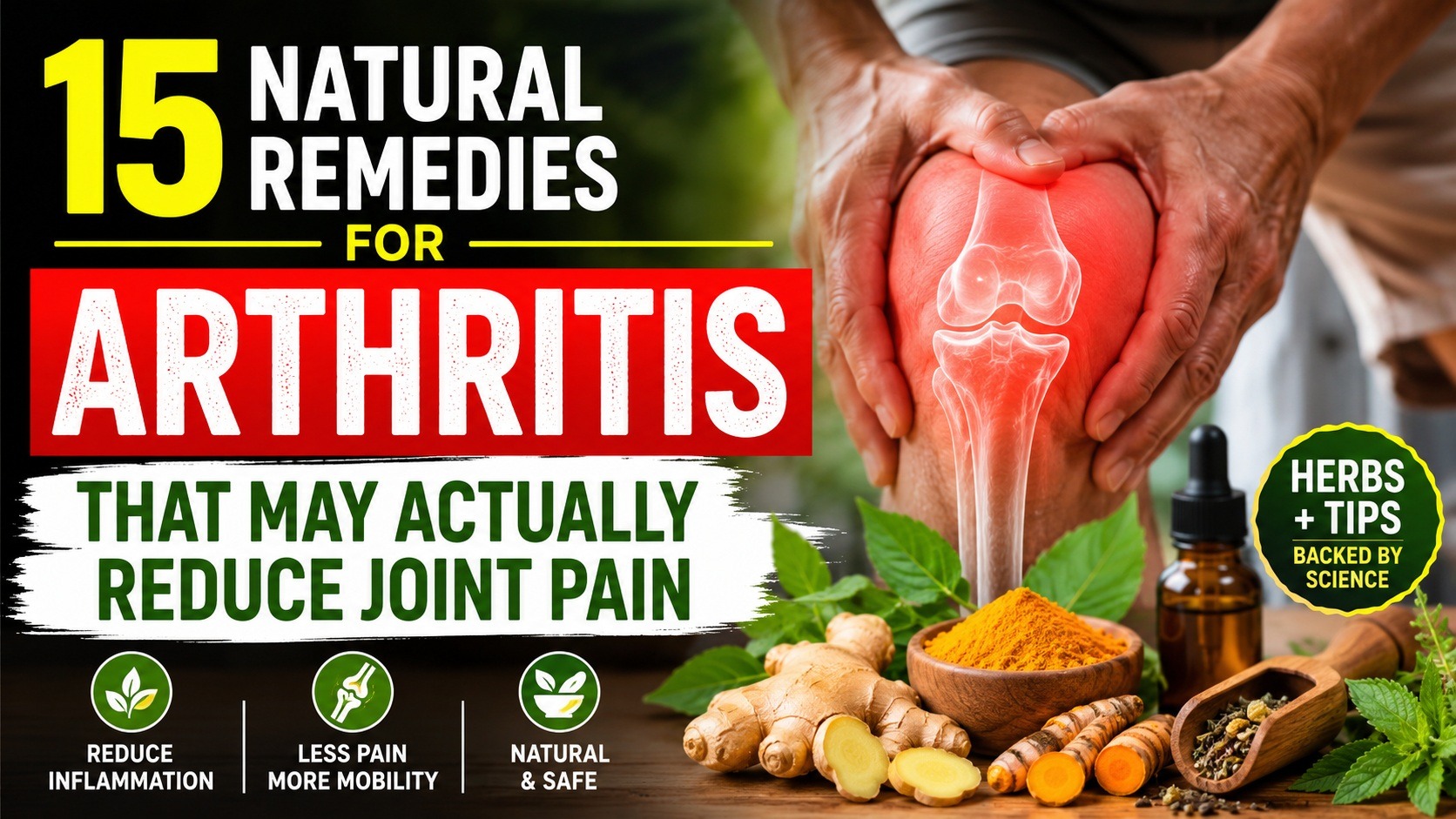
In this video, I’ll share 15 natural remedies that have been used for years to help reduce arthritis pain and inflammation. But here’s the important part—we’re also going to separate traditional remedies from what modern science actually supports.
Some of these remedies have impressive clinical research behind them, while others should be used with caution.
And make sure you stay until the end because I’ll tell you which natural remedies experts consider the most promising today.
If you’re looking for high-quality supplements, I’ve placed links in the description to some of the products I personally recommend, including premium turmeric with black pepper, Boswellia extract, ginger capsules, omega-3 fish oil, and collagen supplements. Purchasing through those links helps support the My Emerald Health channel at no extra cost to you, and I truly appreciate your support.
Before we begin, please like this video, subscribe to My Emerald Health, and turn on notifications so you never miss our weekly health tips.
Let’s get started.
15 Natural Remedies for Arthritis That May Help Reduce Joint Pain Naturally
And I’m not just going to hand you folk remedies. I dug into real clinical trials — many from the US and UK — so you know what’s actually backed by evidence and what’s still unproven. Let’s get into it.
GINGER
Let’s start with something that’s probably already in your kitchen: ginger.
Ginger’s powercomes from natural compounds called gingerols, which act on the same inflammatory pathways that painkillers target — without the same side-effect profile.
Here’s the proof. A 2014 meta-analysis published in the journal Osteoarthritis and Cartilage pooled results from five placebo-controlled trials and nearly 600 osteoarthritis patients. The finding: ginger produced a statistically significant reduction in both pain and disability compared to placebo. A separate Iranian trial of over 200 knee osteoarthritis patients found ginger extract meaningfully reduced pain and morning stiffness compared to placebo after just six weeks.
It’s not a miracle cure — the effect size is modest, and one study even compared it head-to-head with the anti-inflammatory drug indomethacin and found similar pain relief. But for something you can steep in hot water tonight, that’s a solid track record.
How to use it: fresh ginger tea, grated into stir-fries, or a standardized supplement — just check with your doctor first if you’re on blood thinners, since ginger can mildly affect clotting.
TURMERIC
Next up, turmeric’s active compound: curcumin.
This is honestly one of the most heavily studied natural compounds for joint pain — and the results are impressive. A randomized trial published in the journal Trials directly compared curcumin to the prescription NSAID diclofenac in knee osteoarthritis patients. Curcumin matched diclofenac for pain relief — but with far fewer side effects; almost 40% of the diclofenac group needed acid-reducing medication for stomach issues, compared to zero in the curcumin group.
Another 2021 randomized, placebo-controlled trial in Nutrients found that 8 weeks of a concentrated curcumin extract significantly improved pain and function scores in adults with knee osteoarthritis.And a 2021 systematic review pooling 11 trials and over 1,200 patients confirmed curcumin outperformed comparison treatments on standard pain scales.
One catch: curcumin on its own is poorly absorbed by your body. That’s why most quality supplements pair it with black pepper extract (piperine) or a specialized delivery form — look for that on the label.
BOSWELLIA
Third on the list: Boswellia serrata, also known as Indian frankincense.
This resin has centuries of traditional use, but it’s the modern trials that make it worth your attention. A 2024 double-blind, placebo-controlled trial found a standardized Boswellia extract significantly improved knee symptoms and lowered inflammatory blood markers over 90 days. Another placebo-controlled study following patients for 120 days — the longest Boswellia trial to date — found real improvements in pain, stiffness, and even X-ray measurements of the knee joint space.
Boswellia works by blocking a different inflammatory enzyme pathway than turmeric does, which is why the two are often combined. A 2018 comparative trial found that a curcumin-plus-Boswellia combination outperformed either ingredient alone for reducing joint pain over 12 weeks.
DEVIL’S CLAW
Devil’s Claw, a plant native to southern Africa, named for the odd hooks on its fruit.
Research suggests it may ease lower back pain and osteoarthritis symptoms for some people, likely through compounds called harpagosides that dial down inflammatory signaling.
The important caveat: it isn’t for everyone. Because of how it interacts with stomach acid and blood clotting, it’s generally not recommended if you have ulcers or you’re taking blood thinners — so this is a conversation to have with your doctor first.
Woman flexing her feet using a resistance band.
WHITE WILLOW
white willow bark, sometimes called nature’s aspirin — for good reason.
It contains salicin, which your body converts into a compound closely related to the active ingredient in aspirin. That’s exactly why it can help with pain — and exactly why it comes with the same warnings as aspirin. If you have an aspirin allergy, a bleeding disorder, or you’re on blood-thinning medication, this one’s best avoided.
OLIVE LEAF EXTRACT
On olive leaf extract the star compound here is oleuropein, a potent antioxidant. Researchers believe it works by calming both inflammation and oxidative stress — two of the biggest drivers behind arthritis flare-ups. The evidence here is still earlier-stage compared to ginger or turmeric, but it’s a promising, gentle addition worth knowing about.
Its active ingredient, capsaicin, is the same compound found in most arthritis pain creams sold in pharmacies — like Zostrix and similar products. It works by depleting a pain-signaling chemical called substance P, essentially turning down the volume on pain messages sent to your brain.
The clinical evidence is genuinely strong here. A double-blind, placebo-controlled trial of 113 osteoarthritis patients found capsaicin cream applied four times daily was significantly better than placebo, with 81% of users reporting improvement versus 54% on placebo. A more recent systematic review and meta-analysis of eight randomized trials confirmed capsaicin meaningfully reduces pain intensity compared to placebo. A UK-based network meta-analysis even found capsaicin performed comparably to topical NSAIDs for osteoarthritis pain.
One important tip: wash your hands thoroughly after applying it, and never touch your eyes. Expect a warm, tingling sensation — that’s normal, and it usually fades with consistent use over a few weeks.
EUCALYPTUS OIL
Diluted with a carrier oil like coconut or jojoba and massaged into sore joints, it has a cooling, soothing effect that many people find genuinely relaxing. Always do a patch test first — essential oils, however natural, can irritate sensitive skin.
WEIGHT MANAGEMENT
Ninth isn’t a herb at all — and it might be the single most powerful thing on this list: your weight.
Here’s a number that stuck with me. According to a landmark study out of Wake Forest University published in Arthritis & Rheumatism, every single pound of body weight you lose removes about four pounds of pressure from your knees. Lose ten pounds, and that’s roughly 40 pounds of pressure gone with every step.
The American College of Rheumatology and the Arthritis Foundation now jointly recommend weight loss as core, evidence-based osteoarthritis management— and research shows that losing just 5% of body weight measurably improves knee function and pain. A follow-up UCSF study published in the journal Radiology even found that meaningful weight loss helped preserve knee cartilage on MRI scans over time.
This isn’t about appearance. It’s mechanical relief — and it’s one of the most well-evidenced interventions on this entire list.
EXERCISE IN WARM WATER
I know — exercise is often the last thing you want to hear when your joints hurt. But water changes the equation. Buoyancy takes the pressure off your joints while the resistance still builds strength.
A Cochrane review — the gold standard of medical evidence review, based in the UK — analyzed 13 randomized trials involving nearly 1,200 people with knee and hip osteoarthritis. The conclusion: aquatic exercise produced real, measurable improvements in pain and disability, with no serious side effects reported. Swimming, water aerobics, or even just walking laps in a heated pool all count.
Heat Therapy
Heat therapy is one of the oldest and most effective ways to ease arthritis discomfort, especially if your joints feel stiff after sitting for a long time or first thing in the morning.
When you apply heat to an aching joint, it increases blood circulation to the area. This improved blood flow delivers more oxygen and nutrients to the surrounding muscles and tissues while helping them relax. As a result, your joints may feel looser, your muscles less tense, and movement can become much more comfortable.
There are several easy ways to use heat therapy at home. You can place a warm compress or heating pad over the affected joint for about 15 to 20 minutes. A warm bath or shower can also work wonders, especially if multiple joints are affected. Some people even find relief by soaking in a warm tub with Epsom salt, although the evidence for Epsom salt itself is limited.
Heat therapy is especially helpful before physical activity. If you’re planning to go for a walk, do some stretching, or perform your arthritis exercises, warming your joints first can make movement easier and may reduce discomfort during exercise.
However, it’s important to remember that heat isn’t always the best choice. If your joint is noticeably swollen, red, or feels hot to the touch due to active inflammation, cold therapy may be the better option instead.
Cold Therapy
While heat helps loosen stiff joints, cold therapy works in an entirely different way.
Cold reduces blood flow to the affected area, which helps decrease inflammation and numb pain receptors. That’s why many doctors recommend cold therapy when arthritis flares up or after you’ve been physically active and your joints become swollen or sore.
A simple ice pack, a bag of frozen vegetables wrapped in a towel, or a reusable cold gel pack can all be effective. Apply the cold pack to the painful joint for about 10 to 20 minutes at a time. Just remember never to place ice directly on your skin, as this can cause skin damage.
Cold therapy is particularly helpful for people with inflammatory forms of arthritis, such as rheumatoid arthritis, or for anyone experiencing swelling after activity.
Interestingly, many people find that combining both heat and cold provides the greatest relief. For example, you might use a heating pad in the morning to loosen stiff joints before starting your day, then apply a cold pack later if your joints become swollen or painful after exercise or household chores.
Everyone responds differently, so don’t be afraid to experiment safely and see which approach—or combination of both—works best for your body. The key is to listen to your joints and use the right therapy at the right time.
Burdock Root
Burdock root has been used in traditional herbal medicine for centuries to support overall health and help manage inflammatory conditions, including joint pain. In many cultures, it has also been consumed as a nutritious vegetable because it’s rich in fiber, vitamins, and beneficial plant compounds.
One reason researchers are interested in burdock root is because it contains antioxidants, such as phenolic acids and quercetin, which may help protect the body’s cells from oxidative stress. Oxidative stress is believed to play a role in chronic inflammation and may contribute to the progression of arthritis.
Some early laboratory and animal studies suggest that burdock root may have anti-inflammatory properties, but there is still a lack of large, high-quality human studies proving that it can effectively relieve arthritis pain. So while the early findings are promising, more research is needed before scientists can confidently recommend it as a treatment for arthritis.
Burdock root is available in several forms, including teas, capsules, tinctures, and dried root. If you decide to try it, choose products from reputable manufacturers to ensure quality and purity.
It’s also important to know that burdock root may interact with certain medications, including blood-thinning drugs and diabetes medications. If you have a medical condition or take prescription medicines, it’s always wise to speak with your healthcare provider before adding it to your routine.
Feverfew
Feverfew is a flowering herb that belongs to the daisy family and has been used in traditional medicine for hundreds of years. Although it’s most famous for helping prevent migraine headaches, herbal practitioners have also used it to support people dealing with inflammation and chronic pain.
Researchers believe feverfew contains active compounds called parthenolides, which may help reduce the production of inflammatory chemicals in the body. This has led scientists to investigate whether it could also benefit people living with arthritis.
At this time, however, the scientific evidence remains limited. While some people report reduced joint discomfort and improved mobility after using feverfew, larger clinical studies are still needed to determine how effective it truly is for arthritis.
If you’re considering feverfew, remember that natural doesn’t always mean risk-free. Some people may experience mouth irritation, stomach upset, or allergic reactions, especially if they’re allergic to plants in the daisy family, such as ragweed, chrysanthemums, or marigolds.
Feverfew may also increase the risk of bleeding when combined with blood-thinning medications like warfarin or aspirin. It is generally not recommended during pregnancy because it may stimulate uterine contractions.
As with any herbal supplement, it’s best to consult your healthcare provider before using feverfew, particularly if you’re pregnant, breastfeeding, taking prescription medications, or managing an existing health condition.
THE LIFESTYLE FOUNDATION
And finally — the one that ties everything together: your overall lifestyle.
No herb, no cream, no supplement can outrun a lifestyle that’s working against you. A diet rich in fruits, vegetables, whole grains, healthy fats, and omega-3s; regular movement; quality sleep; and stress management — these aren’t the “boring” advice you skip past. They’re the foundation that makes every other remedy on this list actually work.
So that’s 15 research-backed, natural ways to fight back against arthritis pain — from ginger tea to your bathwater temperature.
A quick reminder: natural doesn’t always mean risk-free. Several of today’s remedies interact with blood thinners or aren’t safe if you have certain conditions, so please loop in your doctor before starting anything new, especially if you’re on medication.
If this video helped you, hit subscribe — I post science-backed natural health videos every week here on My Emerald Health. And let me know in the comments: which of these are you going to try first? I read every comment.
Thanks for watching, and I’ll see you in the next one.
Disclaimer
This video is for educational and informational purposes only and is not intended to diagnose, treat, cure, or prevent any disease. Always consult your physician or another qualified healthcare professional before starting any new supplement, herbal remedy, exercise program, or treatment, especially if you are pregnant, nursing, have a medical condition, or are taking prescription medications. Individual results may vary.
A graduate of Computer Science and Information Management Technology. Diploma – Caregiving, Certificates – Dementia and Diabetes Awareness and Management. A researcher, blogger, songwriter, singer and acoustic guitarist. Born in an environment where natural talents such as healing are imparted at our natural birth. This natural talents of healing is the result of our genetic inheritance and the training from family environment.
We use cookies on our website to give you the most relevant experience by remembering your preferences and repeat visits. By clicking “Accept All”, you consent to the use of ALL the cookies. However, you may visit "Cookie Settings" to provide a controlled consent.
This website uses cookies to improve your experience while you navigate through the website. Out of these, the cookies that are categorized as necessary are stored on your browser as they are essential for the working of basic functionalities of the website. We also use third-party cookies that help us analyze and understand how you use this website. These cookies will be stored in your browser only with your consent. You also have the option to opt-out of these cookies. But opting out of some of these cookies may affect your browsing experience.
Necessary cookies are absolutely essential for the website to function properly. These cookies ensure basic functionalities and security features of the website, anonymously.
Cookie
Duration
Description
cookielawinfo-checkbox-analytics
11 months
This cookie is set by GDPR Cookie Consent plugin. The cookie is used to store the user consent for the cookies in the category "Analytics".
cookielawinfo-checkbox-functional
11 months
The cookie is set by GDPR cookie consent to record the user consent for the cookies in the category "Functional".
cookielawinfo-checkbox-necessary
11 months
This cookie is set by GDPR Cookie Consent plugin. The cookies is used to store the user consent for the cookies in the category "Necessary".
cookielawinfo-checkbox-others
11 months
This cookie is set by GDPR Cookie Consent plugin. The cookie is used to store the user consent for the cookies in the category "Other.
cookielawinfo-checkbox-performance
11 months
This cookie is set by GDPR Cookie Consent plugin. The cookie is used to store the user consent for the cookies in the category "Performance".
viewed_cookie_policy
11 months
The cookie is set by the GDPR Cookie Consent plugin and is used to store whether or not user has consented to the use of cookies. It does not store any personal data.
Functional cookies help to perform certain functionalities like sharing the content of the website on social media platforms, collect feedbacks, and other third-party features.
Performance cookies are used to understand and analyze the key performance indexes of the website which helps in delivering a better user experience for the visitors.
Analytical cookies are used to understand how visitors interact with the website. These cookies help provide information on metrics the number of visitors, bounce rate, traffic source, etc.
Advertisement cookies are used to provide visitors with relevant ads and marketing campaigns. These cookies track visitors across websites and collect information to provide customized ads.